How Russia's Sabotage Doctrine Found Its Way into Finland's Cottage Villages
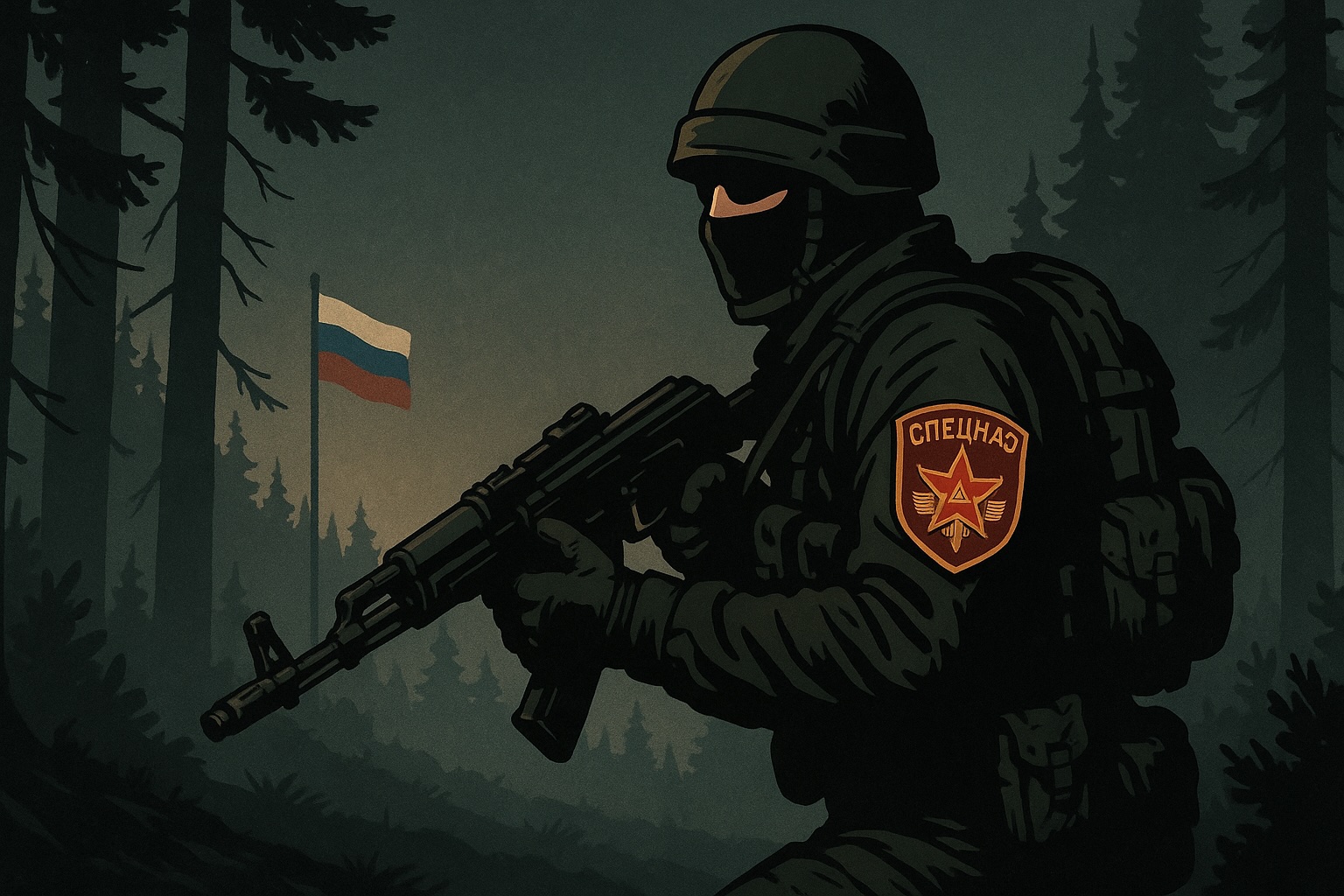
On June 17, 2025, the North Karelia Border Guard announced that it had apprehended a Russian man in the forested, unfenced border area of Välivaara, Kitee. Jevgeni, reportedly a company commander trained by the Wagner mercenary group with experience from the bloody battlefields of Ukraine, had just crossed the border. He applied for asylum in Finland, publicly denouncing Russia's war leadership in a video he posted while already on Finnish soil¹.
The border crossing took place in the immediate vicinity of the eastern border — a deliberately chosen location. Russian intelligence does not need to learn how the Finnish system works, how one gets caught, or what pretext makes it credible even when the border is closed. They know it inside and out after decades of study. If this man is released, Finland will have received the same kind of unmarked soldier as the little green men who appeared in Crimea in February 2014. Same training, same operational readiness, same ability to operate among civilians.
When we examine the Soviet military doctrine from the 1940s onward, a clear continuum emerges. The Stalin-era GRU developed the concept of illegals — agents operating under deep cover who lived for years in target countries under false identities. The idea was simple yet ingenious: normal intelligence channels break down when war erupts, but pre-positioned agents can continue operating. The highest-ranking GRU defector, Stanislav Lunev, testified before the United States Congress in 1992 that hundreds of agents had been tasked with finding suitable locations for weapons caches, including small-scale nuclear devices².
This was not mere theory: nearly 80 weapons caches were discovered in Austria in 1996³, Switzerland's Projekt-26 stay-behind network was exposed complete with pre-positioned weapons⁴, and caches containing arms, communications equipment, and sabotage materials were found in the Grunewald forest of West Berlin. The caches had been booby-trapped to prevent unauthorised access — a clear hallmark of professional operations. How many similar caches exist in Finland?
The Spetsnaz special forces doctrine evolved from the 1950s onward, focusing on penetration to a depth of 350–1,000 kilometres behind enemy lines⁵. This depth-of-penetration thinking is critical to understanding why Russian property acquisitions in Finland are not limited to border areas but extend deep into the interior. The first independent reconnaissance companies were formed in 1949, and by 1962 entire brigades had been trained to operate both in uniform and in civilian clothing.
The Mitrokhin Archive — 25,000 pages of classified KGB documents — revealed the true scale of the system⁶. Vasili Mitrokhin worked in the KGB archive from 1972 to 1984, systematically copying documents that he brought with him when he defected to the West in 1992. The documents reveal that properties were selected according to three criteria: proximity to critical infrastructure, potential to serve as a base of operations, and ease of access and egress. The Soviet Union divided target countries into zones. These were the immediate border zone (0–100 km), operational depth (100–500 km), and strategic depth (500+ km).
The collapse of the Soviet Union in 1991 did not interrupt the activities of the intelligence services. The KGB was split into the FSB and SVR, but 85 per cent of personnel continued in the same roles⁷. The GRU survived intact as military intelligence. Networks, methods, even encryption systems were preserved. Vladimir Putin's rise to power in 1999 further strengthened the position of the intelligence services. Putin himself was a KGB lieutenant colonel in Dresden, and he brought with him his "siloviki" network — veterans of the security services.
At the turn of the millennium, a new phenomenon began to appear in Finland. Russians started purchasing properties at an unprecedented pace. According to official statistics, Russians bought approximately 5,500 summer cottages during the 2000s⁸. In 2011, a peak of 624 transactions was recorded, but after that the numbers began to decline. Why? Because the objectives had been achieved. A sufficient number of cells had been built, ready for activation.
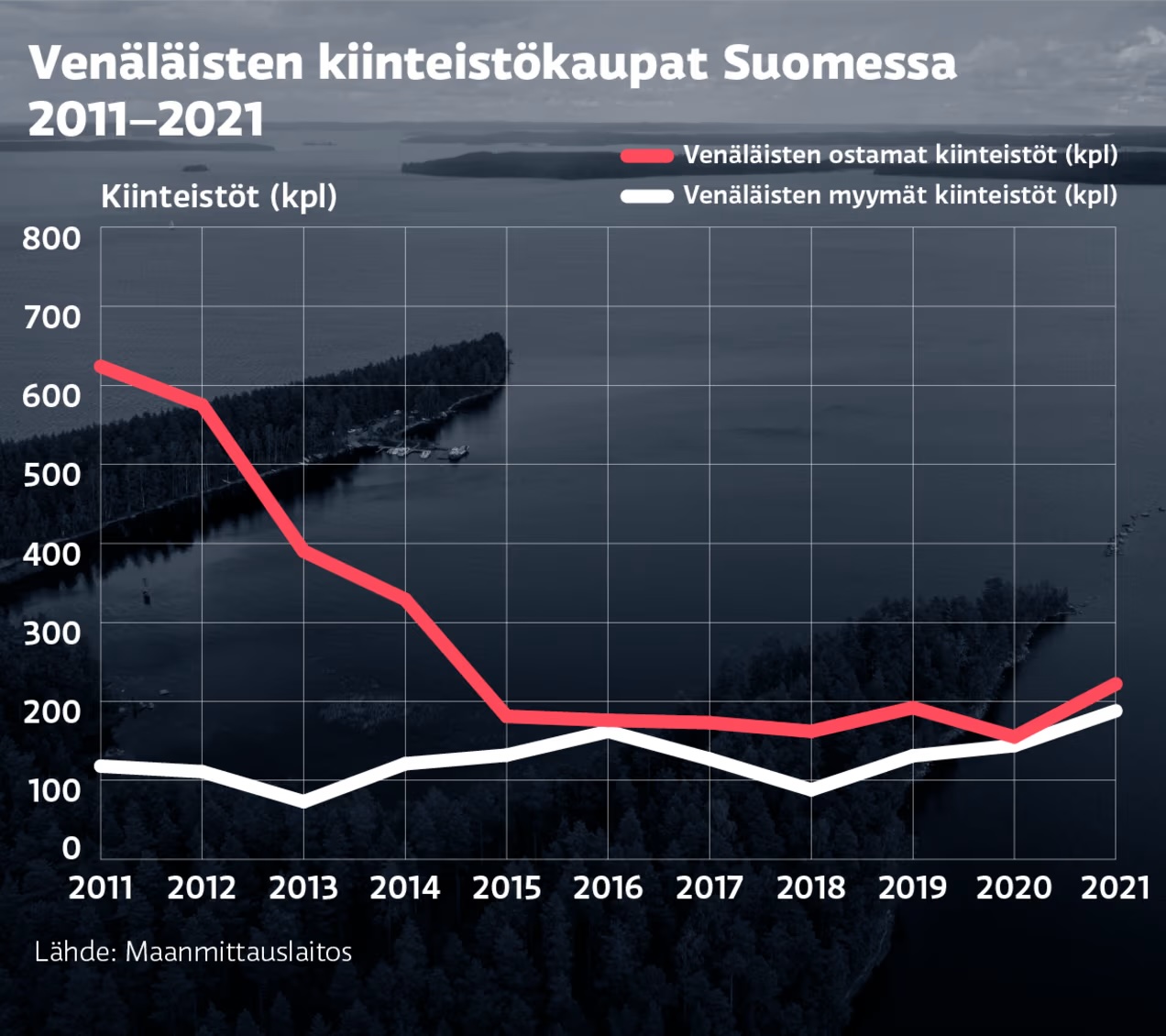
Kuva Ylen artikkelista, vuodelta 2023. https://yle.fi/a/3-12339022
When we overlay the National Land Survey data with Fingrid's transmission grid map, a dangerous correlation emerges: Russian property purchases systematically cluster near the nodes of the 400-kilovolt transmission grid⁹. The darkest area on the map in south-eastern Finland — over 180 property purchases — sits precisely where the transmission grid connects to lines coming from Russia. The clusters in central Finland align with grid junction points. Along the Ostrobothnian coast, purchases follow the 400 kV line northward, consistently concentrating near the grid's critical nodes.
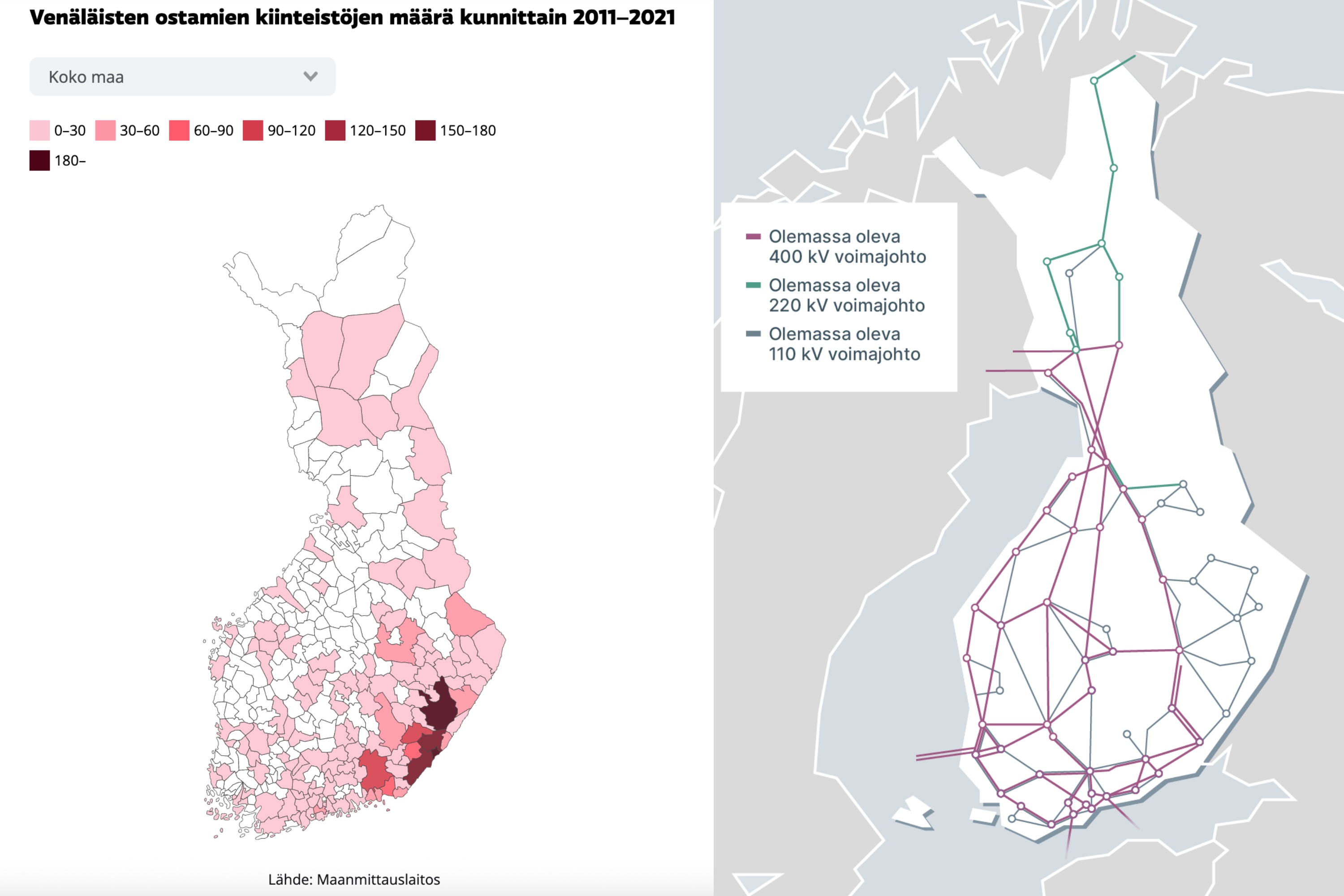
Mökkiryppäät osuvat täsmällisesti sähköverkon solmukohtiin. Lähde Fingridin verkkosivut + Yle / Maanmittauslaitos 2023.
Perhaps Finnish military intelligence has made the same observation. They have placed the Yle map on an overlay with Fingrid's transmission grid and noted: the cottage clusters are strategically positioned, enabling the coordinated blackout of Finland's entire power grid in a single night. If this were to happen in the depths of a severe winter freeze, the consequences would be catastrophic. Hundreds of thousands of Finns would freeze in their homes for days, possibly weeks.
The entire colour spectrum along the eastern border runs decidedly red — meaning Russian-owned cottage clusters line the full length of the frontier, strategically placed, systematically built up over nearly two decades.
The most significant build-up occurred between 2010 and 2014. Putin accelerated preparations even as property transaction numbers began to decline. This is a sign that a sufficient network had already been established. By the time the Crimean conflict began in 2014, an adequate number of cells had already been placed in Finland, ready for activation.
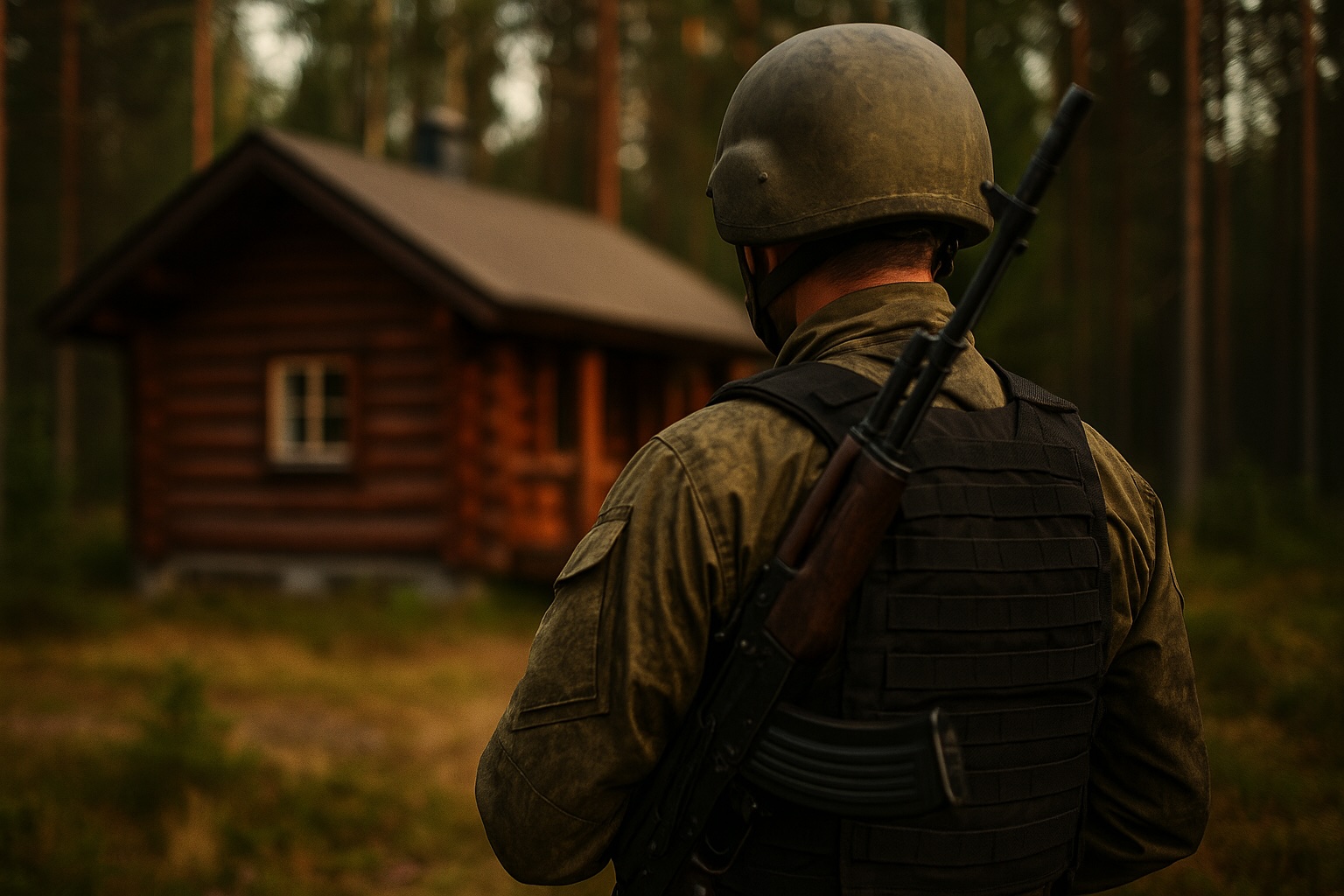
These cottages are not ordinary holiday properties. They are stocked with tools, screws, pipes, mechanical timers, and other materials — yet they stand empty. In 2025, more than a decade later, these log-built cottages remain unused but maintained, with even the bedding still in place.
Soviet sabotage doctrine taught the principle of "dvojnoje naznačenije" — dual-use application of everyday objects¹¹. Screws become shrapnel material, pipes become explosive casings, timers enable remote detonation. Hardware store goods become sabotage tools when you know how to combine the components. How many of these cottages have an isolated attic in the interior, with a suitably small west-facing window at the far end? It makes a perfect observation post or radio transmitter placement. How many have backup generators beneath the floor and fuel tanks concealed in old chest freezers in the yard?
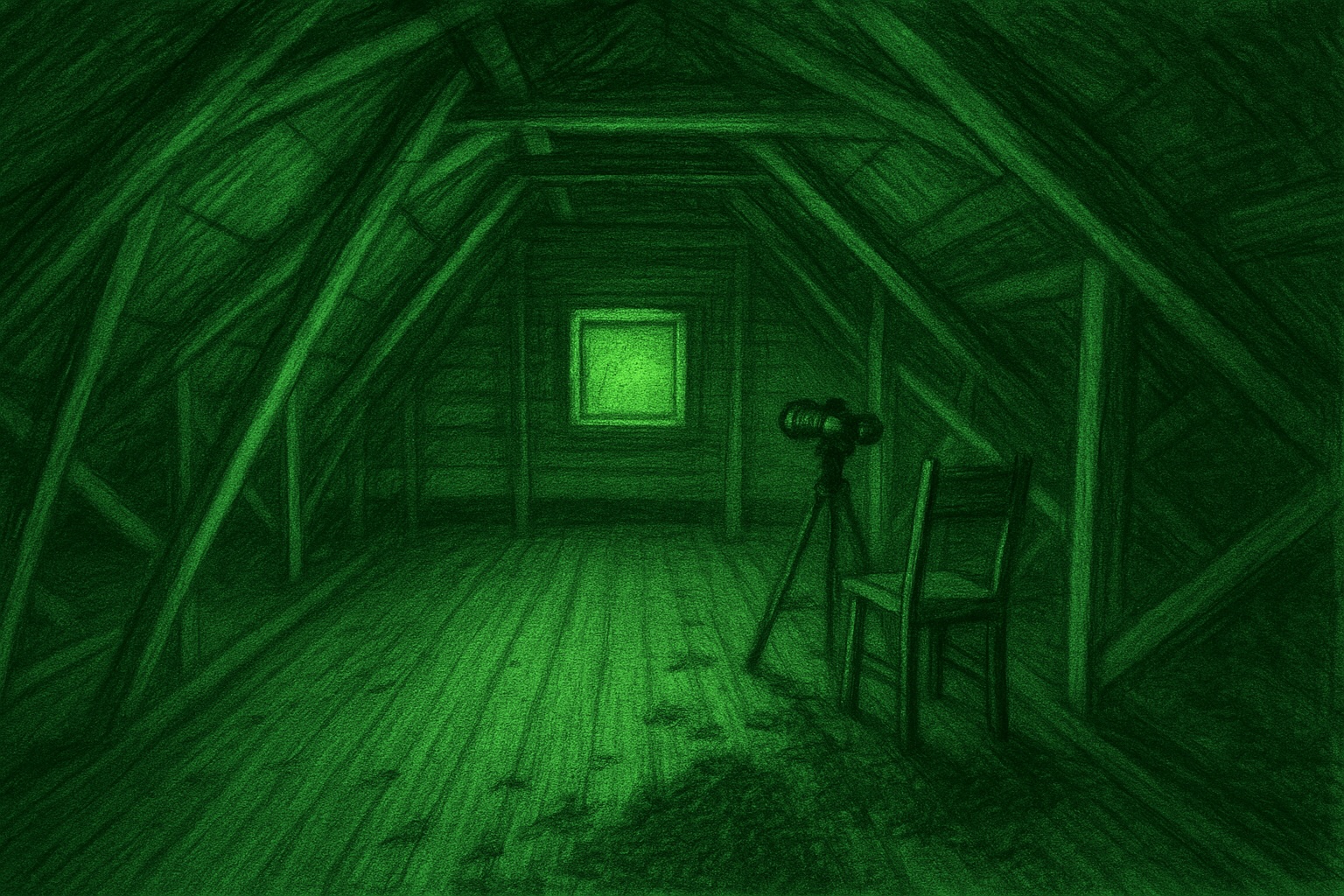
Kuvituskuva: Tältäkö vintillä näytää, kun katsotaan länteen?
The classic GRU cell structure follows the 3-5-7 principle: one cell leader controls 3–7 sub-cells¹². When this model is applied to 5,500 cottages, the mathematics reveals the potential scale of the organisation in Finland. Using an average of five sub-cottages per control cottage, we arrive at 1,100 first-tier control points, 220 second-tier regional centres, 44 provincial centres, and approximately nine top-level command centres. Undoubtedly, Airiston Helmi was one such command centre — or a sacrificial "decoy" designed to be discovered. This mirrors Finland's strategic provincial division with chilling precision.
The interior of the country therefore contains hundreds of inconspicuous clusters of 3–10 cottages, each positioned near critical infrastructure. Not only 400 kV power lines, but placed at railway junctions, near telecommunications masts, close to water treatment plants and military installations. These smaller, more remote clusters are harder to detect than large complexes like Airiston Helmi — and that is precisely what makes them more dangerous.
Some of the cottages are even used by Finns, while their "friendly" Russian neighbours hold the keys. This arrangement provides perfect cover. Neighbours see Finns coming and going — everything appears normal. At the same time, the Finnish users serve as unwitting caretakers, keeping the cottages in good condition and reporting any problems. Trusting Finns simply think: "Nothing to see here — our kind Russian friend lets us use the cottage."
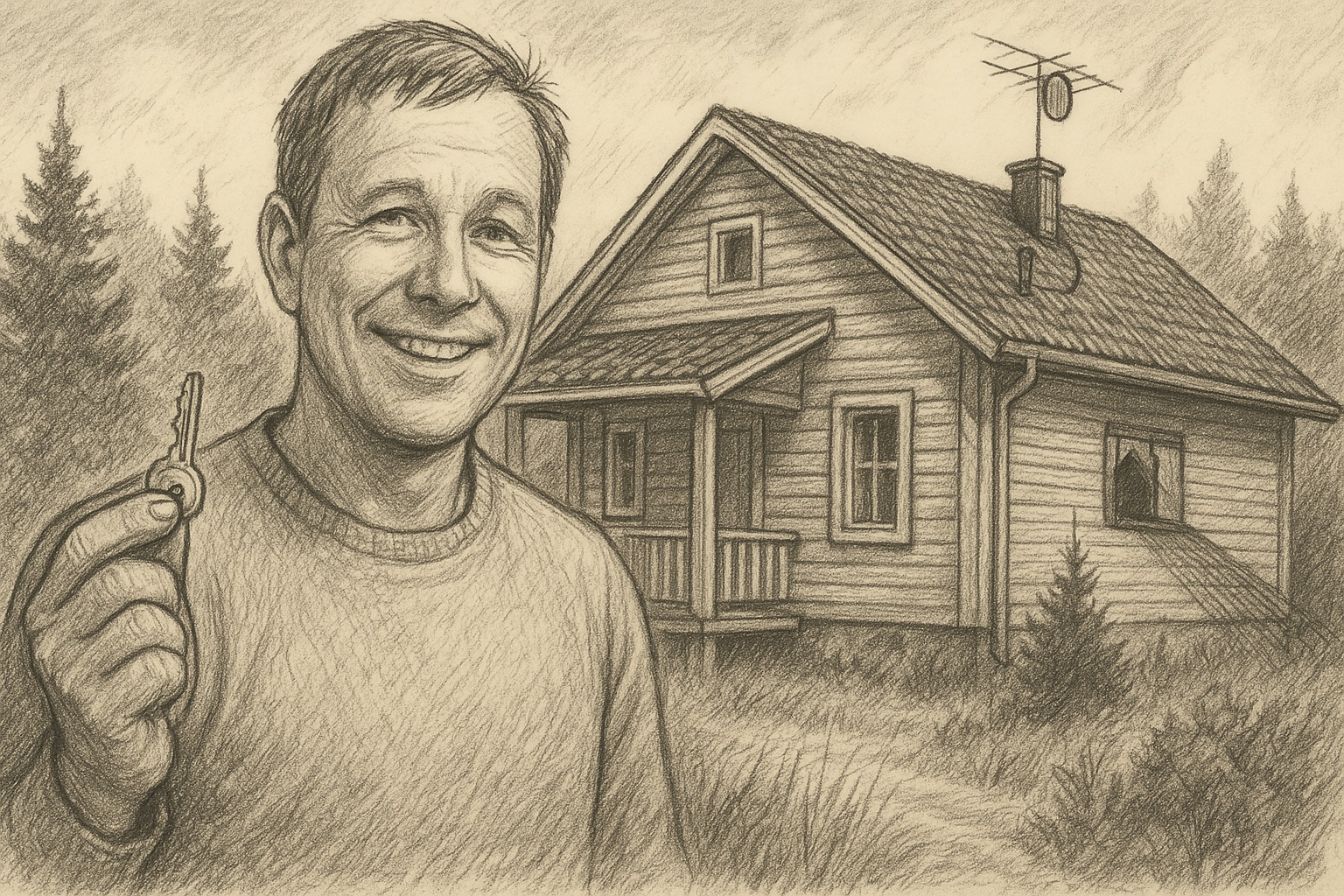
Onko sinunkin mökissäsi jaettuja avaimia? Mitä tiedät mökkisi historiasta? Onko lukot vaihdettu?
Equally alarming is the role of family ties. In eastern Finland, thousands of families have relatives across the border, creating a unique vulnerability¹³. Russian authorities can pressure relatives living in Russia, who then appeal to their kin in Finland. "Your cousin needs help buying a cottage" sounds like an innocent request, but it may be part of a broader operation. The Finnish Security and Intelligence Service (Supo) has specifically warned in its annual reports about the exploitation of family ties for recruitment¹⁴.
The financial trails lead deep into the Russian state apparatus. Five cottages at 150,000 euros each, plus 10–15 years of upkeep, amounts to nearly a million euros invested in properties that generate no return. No private investor would do this — but what if the state offers zero-interest loans, tax deductions, and maintenance subsidies? Suddenly the equation changes. State-controlled companies like Gazprom and Rosneft offer their employees benefits for purchasing foreign properties¹⁵. Veterans' organisations receive grants for recreational use. On paper, everything looks normal.
The pointing finger also turns toward Finnish construction companies. How many cottages did Honkarakenne, for example, deliver on a turnkey basis between 2010 and 2014 to Russian plot owners, conveniently oriented on a west-east axis like a terrestrial defensive line? How many of these were placed exactly where they serve strategic purposes? The builders did their work in good faith, but the end result may serve entirely different objectives.
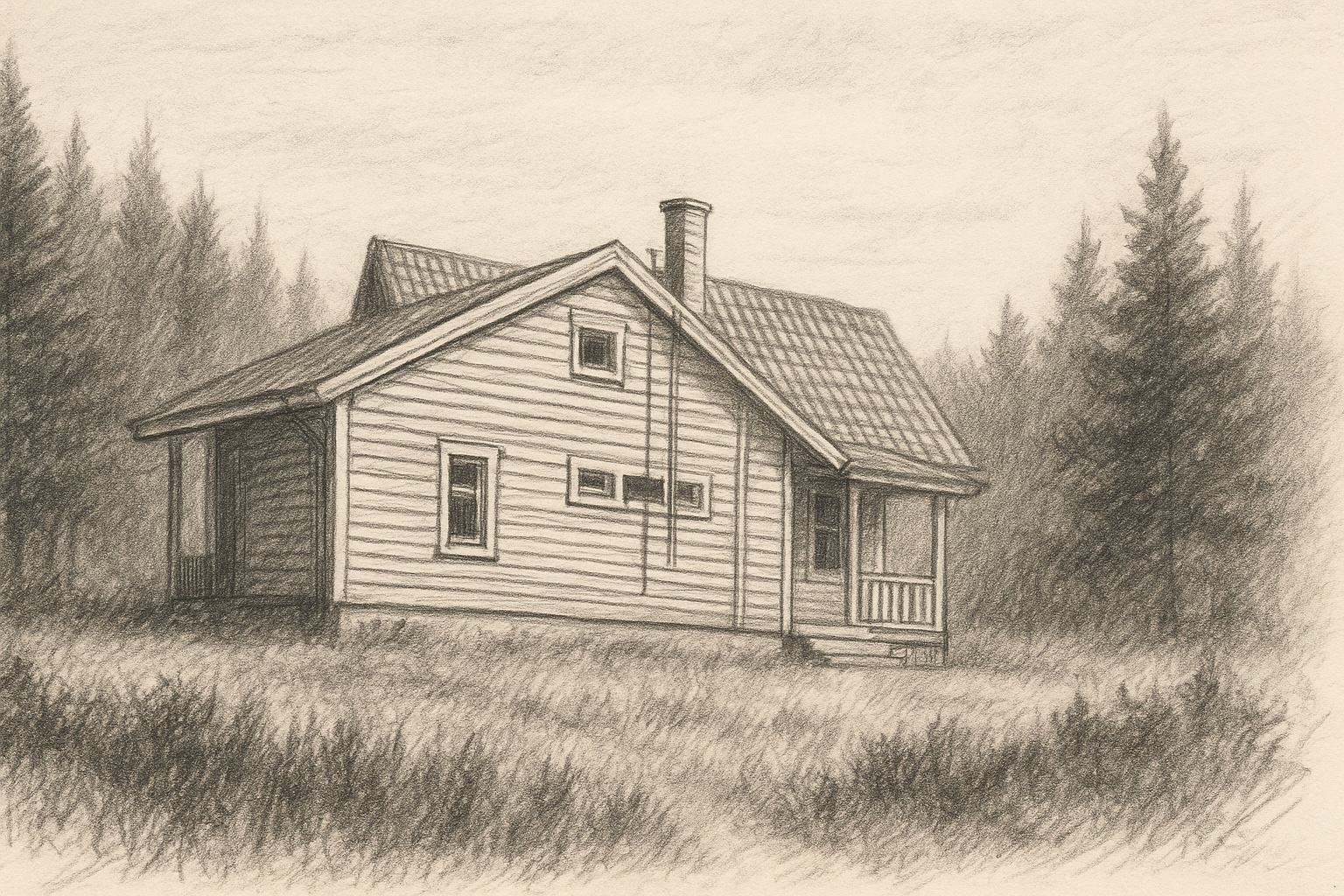
Kuvituskuva: Halpa tontti, jonka päällä "halpa" mökki?
The Airiston Helmi case in 2018 revealed only the tip of the iceberg¹⁶. Pavel Melnikov's company acquired 17 properties on strategically located islands, but media attention focused squarely on this one case. Meanwhile, the interior of the country contains hundreds of similar cottage complexes, each positioned near critical infrastructure. Airiston Helmi served as an unintentional smokescreen. While everyone was looking at the archipelago, no one was looking inland.
The Ministry of Defence's comment in March 2022 reveals a staggering naivety: "The Ministry does not consider any property ownership to be inherently a threat"¹⁷. The Ministry emphasised the "cheapness" of the purchases, as though the price of a property were a meaningful factor in military strategic planning. This is like saying the Trojan Horse was no threat because it was a free gift.
Citizens should be wide awake and report their observations of unusual stockpiling without further delay. Is there a fully equipped cottage near yours that was used by Russians but has not been visited in a decade? Have you noticed unusual structures such as peculiar antennas, oversized electrical connections, or a proliferation of outbuildings? These are not fantasies — they come straight from the military doctrine of Russia and the Soviet Union before it.
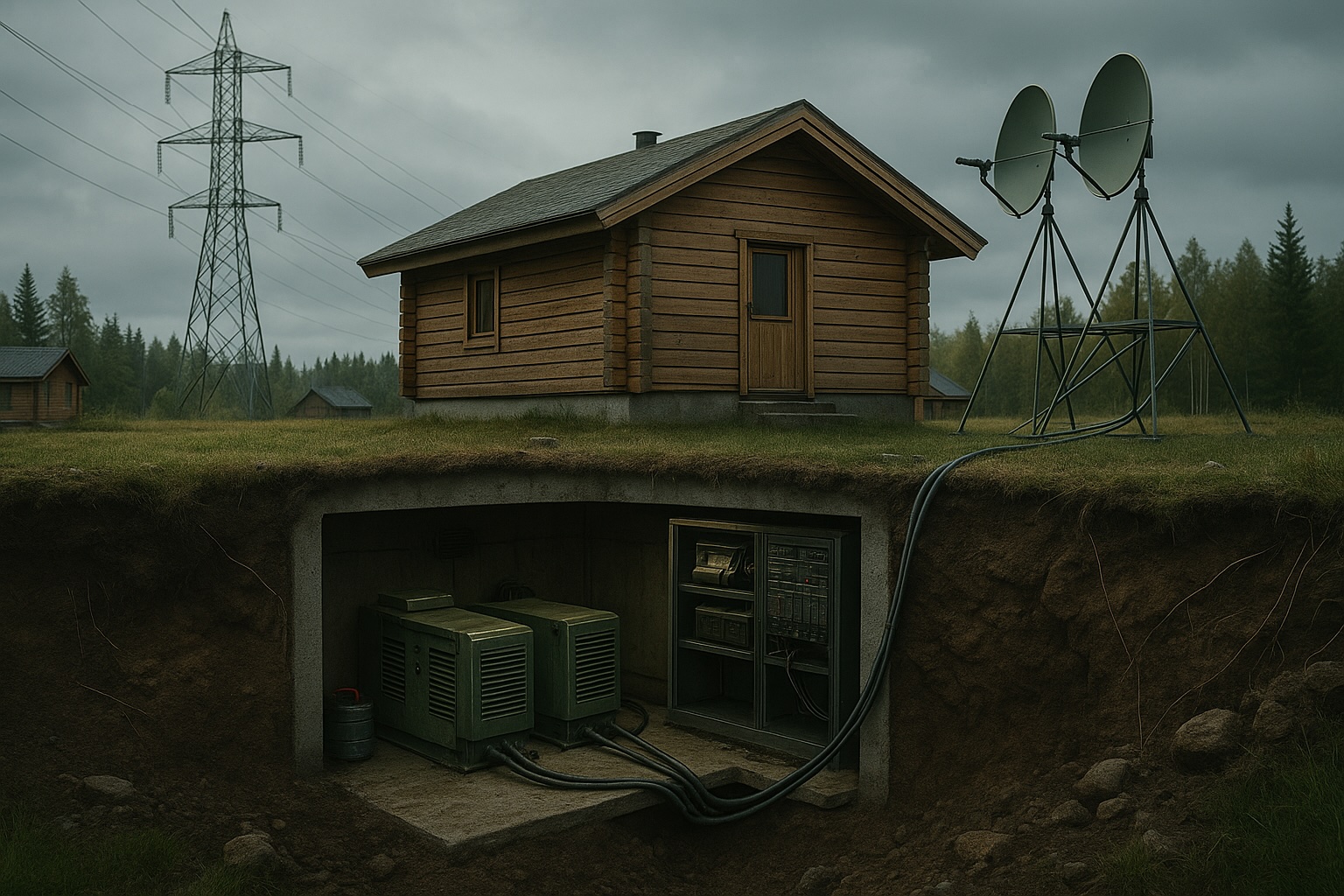
Kuvituskuva: Moni kakku päältä kaunis
Now, in the summer of 2025, the network may already be entering its activation phase — which may partly explain the felling of telecommunications masts and breaches at water intake plants that may have already been carried out as rehearsals. Russia's border has been closed since November 2023, severing normal contact. Now a Wagner-trained soldier has crossed the border. If he is released, he has the training, experience in asymmetric warfare, and potentially access to a ready-made infrastructure.
Finland's 1,340-kilometre border with Russia has made our country a uniquely attractive target. During the era of the Agreement of Friendship, Cooperation, and Mutual Assistance (YYA Treaty, 1948–1991), Soviet intelligence operated more freely than in NATO countries¹⁸. This laid the foundation upon which later operations were built. Finland is now a NATO member, but the infrastructure is already in place. Russian intelligence was a far more extensively operated organisation than its Western counterparts — a fact that has received far too little attention.
Europe-wide revelations confirm the pattern. In Norway, the government blocked property sales on security grounds in 2024¹⁹. In Estonia, 17 individuals have been arrested for espionage since 2008²⁰. In Poland, an 18-person sabotage network was uncovered²¹. In the Czech Republic, GRU Unit 29155 destroyed ammunition depots in 2014²². Finland is not the exception. It is part of a larger pattern.
The calculations are straightforward but frightening. If the classic cell structure is applied to 3,500–5,500 properties, we are talking about hundreds of operational cells, dozens of regional centres, and the capability to strike simultaneously at dozens of targets. Every empty but fully equipped cottage is a potential base of operations. Every strategically placed property near critical infrastructure is a potential launching point for sabotage.
What easier way to destroy Finland's power grid and radio intelligence than by placing comfortable, self-sufficient cottage clusters throughout the Finnish wilderness? For over a decade, these cottages have been waiting — maintained, equipped, kept in a state of readiness. Now that a trained Wagner soldier has arrived in Finland, the question must be asked: has the time for activation come? How many other "defectors" will follow if one gets through? How many sleeper cells are waiting to be awakened in Finnish cottage villages?
The facts are clear: Russian property purchases follow a precise military-strategic logic. The locations correlate with critical infrastructure — as anyone can see from the maps. The structure follows a well-known military cell organisation. The financing points to state backing. Maintenance continues year after year with no financial return. Now Russia is testing the waters by sending a military "asylum seeker" to see just how naive Finnish authorities are. He is the same kind of unmarked soldier as those who seized Crimea.
This is not a conspiracy theory. This is documented reality, based on official statistics, mapped locations, and established military doctrine.
The question is not whether there are sleeper cells in Finland. The question is how many, where exactly they are located, and which Finnish citizens are maintaining them. The most burning question of all: when will they be activated?
Sources
- YLE (2025). Wagner-sotilas loikkasi Suomeen. Julkaistu 11.7.2025.
- Lunev, S. (1998). Through the Eyes of the Enemy. Regnery Publishing. s. 82-84.
- Ganser, D. (2005). NATO's Secret Armies. Frank Cass. s. 256.
- Tanner, S. (2004). Projekt-26: Die Geheimarmee der Schweiz. Neue Zürcher Zeitung.
- Suvorov, V. (1987). Spetsnaz: The Inside Story of the Soviet Special Forces. Norton. s. 145-167.
- Andrew, C. & Mitrokhin, V. (1999). The Sword and the Shield: The Mitrokhin Archive. Basic Books.
- Soldatov, A. & Borogan, I. (2010). The New Nobility. PublicAffairs. s. 34.
- Maanmittauslaitos (2022). Tilastot ulkomaalaisten kiinteistöomistuksesta.
- Fingrid (2025). Suomen kantaverkko. Saatavilla: www.fingrid.fi
- McDermott, R. (2013). Putin's Military Modernization Plan. Foreign Military Studies Office.
- GRU Field Manual (1987). Loikkarin toimittama kopio, CIA:n arkisto.
- Rezun, V. (1992). Inside Soviet Military Intelligence. Macmillan. s. 67-89.
- Suojelupoliisi (2023). Vuosikertomus. s. 23-24.
- Suojelupoliisi (2024). Kansallinen turvallisuuskatsaus.
- Dawisha, K. (2014). Putin's Kleptocracy. Simon & Schuster. s. 234-245.
- YLE MOT (2018). Airiston Helmen venäläisomistukset. Julkaistu 15.10.2018.
- YLE (2022). Venäläisten kiinteistökaupat kiihtyneet. Julkaistu 2.3.2022.
- Rentola, K. (1997). Niin kylmää että polttaa. Otava. s. 156-189.
- Norwegian Intelligence Service (2024). Focus 2024 Annual Report. s. 34.
- Estonian Internal Security Service (2024). Annual Review. s. 67-69.
- Polish Internal Security Agency (2024). Sabotage Network Dismantled. Press release.
- Czech Security Information Service (2021). Vrbětice Investigation Final Report.