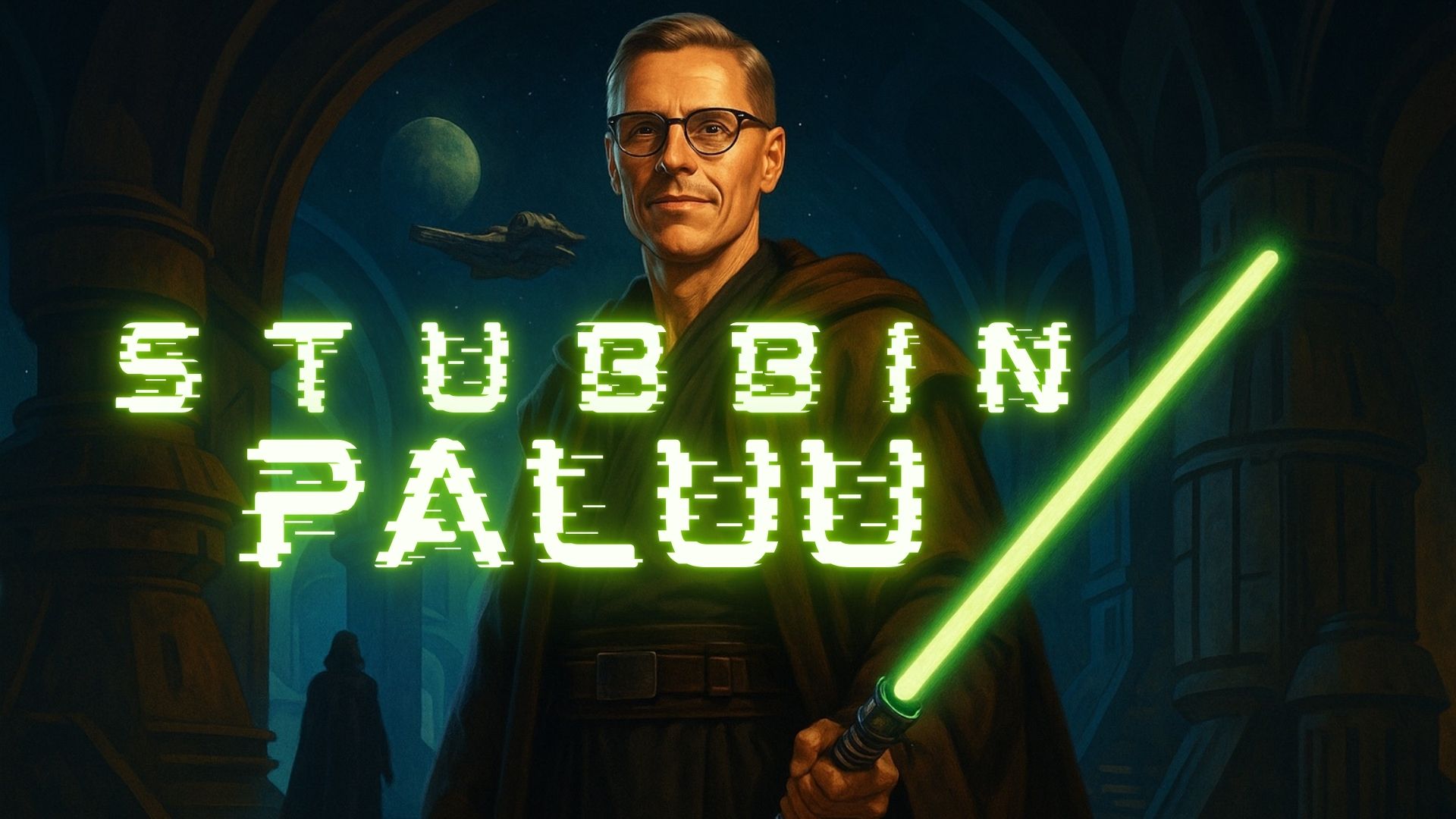
Stubb's Return
From a Lavrov Selfie to Europe's Key Mediator
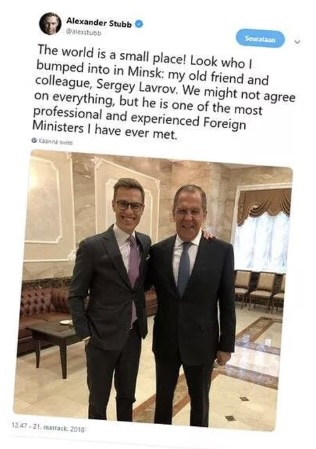
In November 2018, Alexander Stubb posted a photo of himself with Sergei Lavrov and called Russia's foreign minister "an old friend." Days later, Russia seized Ukrainian naval vessels in the Kerch Strait. Politico listed the tweet among the "seven most regrettable tweets of all time."
Seven years later, Alexander Stubb sits at the heart of the Ukraine peace negotiations. He speaks with Trump weekly, talks with Zelensky almost daily, and is the only European leader Trump invited to Mar-a-Lago for a round of golf. In December 2025, he declared that peace was "closer than ever."
How did the politician who took a selfie with Lavrov rise to become Europe's most central peace mediator? The answer lies in a combination no one else possesses: historic experience with Russia, personal access to Trump, and an ability to build relationships with adversaries — even when it looks naive.
The Birth of Golf Diplomacy at Mar-a-Lago
The roots of Stubb's mediation role reach back to February 2025, when Senator Lindsey Graham met Stubb at the Munich Security Conference. Graham made a surprising proposal: a round of golf with Trump.
In March 2025, Stubb flew to Mar-a-Lago. He and Trump won a pairs tournament together. According to the Wall Street Journal, Trump and Stubb then began communicating regularly through text messages and late-night phone calls.
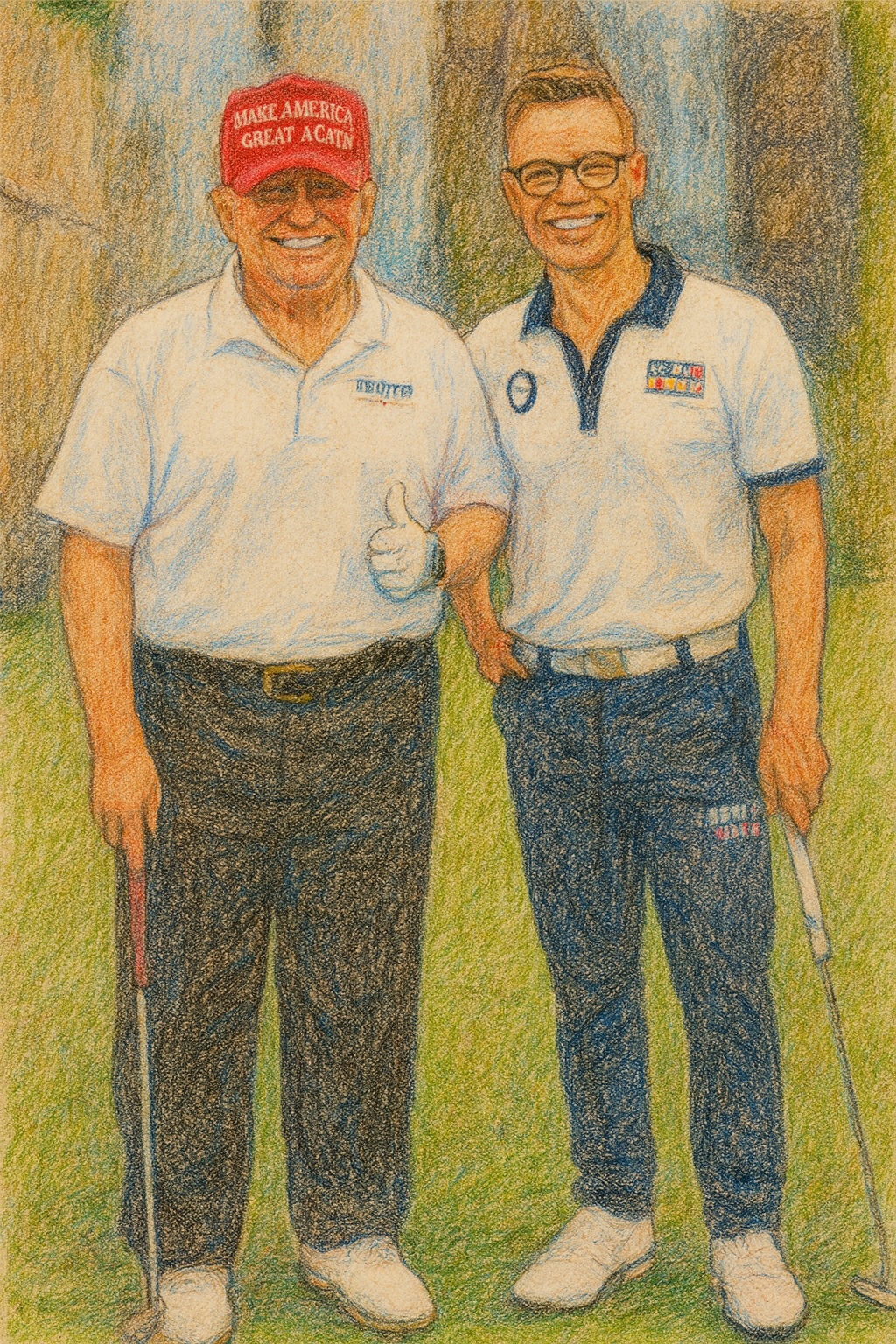
The pivotal moment came over lunch, when Trump asked Stubb directly: "Can you trust Putin?"
Stubb answered without hesitation: "You cannot."
This directness appears to have cemented Trump's trust in the Finn. NBC News later called Stubb "a surprisingly central figure" whose position rests on personal chemistry built through golf.
Monocle magazine summed up the difference from other European leaders: "Where most European leaders arrived at Trump's door clutching stacks of briefing papers, Stubb arrived at Mar-a-Lago with a set of golf clubs."
080808 — An Early Warning Few Heeded
Stubb's Russia expertise did not materialise out of thin air. When he took office as foreign minister in April 2008, Finland held the OSCE chairmanship — and four months later, Russia invaded Georgia.
Stubb travelled to Tbilisi with French Foreign Minister Bernard Kouchner to mediate a ceasefire and negotiated with Lavrov in Moscow. Two weeks after the war ended, he delivered a speech at the Ambassadors' Conference that proved prophetic:
"The date 080808 became the dark milestone of a new world politics. Autocracy challenges democracy."
In the speech, Stubb criticised the "fantasy of non-alignment" and predicted a "renaissance" of NATO's Article 5. He was accused of overreacting. History proved him right.
This experience — direct negotiations with Lavrov in the midst of a Russian war of aggression — gave Stubb a perspective few European leaders possess. He knew as early as 2008 how Russia operates. He also knew that negotiations cannot be conducted without personal relationships.
The "Naivety" of the 2010s in a New Light
After the Georgian war, however, Stubb's Russia line appeared to soften. As prime minister and finance minister from 2014 to 2016, he supported policies that in hindsight look naive.
He backed the Nord Stream gas pipeline and dismissed criticism as "politicisation." He supported Rosatom's participation in the Fennovoima nuclear power plant. He advocated visa-free travel for Russians. He saw no need to address Russian property purchases in Finland.
And in November 2018, he posted a selfie with Lavrov.
These decisions and actions looked like mistakes after Russia invaded Ukraine in 2022 — but they also created something that can now be leveraged: experience of Russia relations and an understanding of how Moscow thinks.
As president, Stubb's line has shifted sharply. In his inaugural address in March 2024, he stated: "The post-Cold War era is over. It ended with Russia's war of aggression in Ukraine." He has called Russia "an aggressive, revisionist, and imperialist state."
His ability to understand Russia — including its logic and interests — makes him a credible mediator. He is not an idealist who believes in Putin's goodwill. He is a realist who knows that peace cannot be achieved without compromise.
October 2025: From the White House to the Peace Table
October 2025 marked the consolidation of Stubb's mediation role. Over the course of the month, he systematically built his position towards all parties.
On 9 October, Stubb met Trump at the White House. The official topic was a $6.1 billion icebreaker deal — a significant contract that strengthened Finland's position as an Arctic actor. But the real significance lay elsewhere: Trump praised Stubb as "a young, powerful man" and spent time discussing the situation in Ukraine.
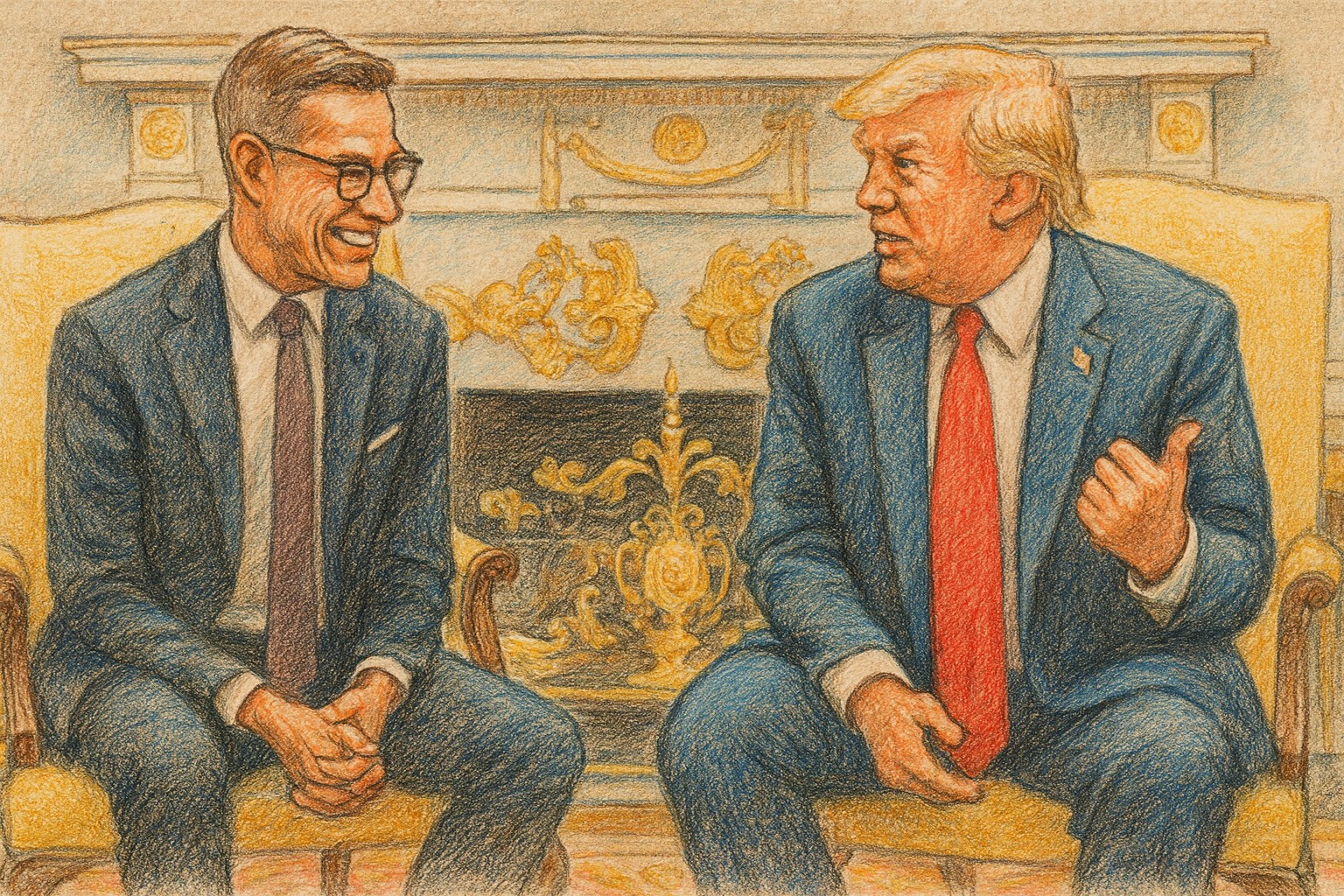
The following day, Stubb called Zelensky and reported the details. This pattern — a meeting with Trump, immediate reporting to Zelensky — became established over the following weeks.
On 21 October, Stubb signed a joint statement by 17 leaders, "Peace for Ukraine," which supported Trump's ceasefire approach but emphasised security guarantees for Ukraine. Three days later, he participated virtually in a 40-leader Coalition of the Willing meeting in London.
The most significant observation from October is the transformation of Stubb's role: he was no longer just one European leader among many, but an active channel of information between Trump, Zelensky, and European leaders.
November 2025: A Historic Month Across Five Continents
November 2025 was the most active month of Stubb's presidency in terms of foreign policy. He travelled to Brazil, Belgium, the United Arab Emirates, and South Africa, and became the first Finnish president to attend a G20 summit.
In Johannesburg on 22–23 November, Stubb delivered two speeches. The first emphasised the importance of the multilateral system. The second highlighted Finland's critical mineral reserves: roughly 90 per cent of the EU's nickel, chromium, and cobalt. This was no coincidence — Stubb was building negotiating leverage for Finnish-American cooperation.
Something significant happened on the margins of the G20. Stubb and Italian Prime Minister Giorgia Meloni called Trump together to discuss a 28-point peace plan. Stubb told Bloomberg that European leaders had not been informed of the plan in advance and that it contained "elements straight from Russia's playbook."
This criticism is significant: Stubb is not a Trump sycophant but an independent actor who dares to push back — including publicly.
25 November was a particularly intense day: a morning call with Zelensky about the frontline situation, a call with NATO Secretary General Rutte, a Coalition of the Willing video conference convened by Macron and Starmer. That same day, Stubb stated: "The coming days are decisive for achieving a just and lasting peace in Ukraine."
December 2025: "Peace Closer Than Ever"
The first days of December have brought Stubb's most significant public statements on the peace process.
On 4 December, he spoke at the 25th anniversary celebration of CMI at Finlandia Hall. The peace mediation organisation founded by Martti Ahtisaari was his home turf: Stubb served as chair of CMI's board from 2017 to 2024. In his speech, he prepared the Finnish public for compromises:
"The terms of peace will be difficult to swallow for many, but especially for the Ukrainians."
He emphasised that a "just peace" would most likely not be achieved. This is the language of a realist, not an idealist.
On 8 December, Der Spiegel leaked a phone call in which Stubb said: "We must not leave Ukraine and Volodymyr alone with these people" — referring to Trump team members Steve Witkoff and Jared Kushner. The leak reveals that Stubb is actively working on Ukraine's side behind the scenes, even while maintaining a functioning relationship with Trump.
9 December brought Stubb's most significant public statement. At an Atlantic Council event alongside former NATO Secretary General Jens Stoltenberg, he revealed that negotiations had advanced considerably. The original 28-point plan has been condensed to 20 points. Three separate documents are under discussion: a framework plan, a security guarantees document, and a reconstruction document.
Stubb told Bloomberg: "We're quite close."
Why the President of Finland?
The Lowy Institute think tank analysed why the president of a small Nordic country has risen to such a central role. The answer is a combination of history, geography, and personal qualities.
Finland's historical experience resonates. Finland is a small nation that preserved its independence in the shadow of a great-power neighbour — though it lost territory in the process. Stubb's father and grandfather were born in Vyborg, which now belongs to Russia. This history resonates with both Ukrainians and Americans: Finland knows what it means to live next door to Russia.
A tradition of peace mediation lends credibility. Martti Ahtisaari's Nobel Prize-winning work in Kosovo and Namibia built Finland's reputation as a peace mediator. Stubb served as chair of CMI's board and continues this legacy.
Strategic location speaks for itself. Finland shares a 1,340-kilometre border with Russia, possesses one of Europe's largest artillery forces alongside Poland, and has 64 F-35 fighter jets on order. NATO's newest frontline member speaks from experience, not theory.
Then there is the personal profile. Stubb speaks five languages fluently. He is a European long-distance triathlon champion in his age group. He can play golf. These are not matters of political substance, but they are matters of personal chemistry — and personal chemistry determines who Trump picks up the phone for.
"Nudging Things in the Right Direction"
Stubb has described his own role modestly. He is not a formal negotiator but a "whisperer" — in his own words, seeking to "nudge things a little in the right direction."
The facts suggest a more substantial role. He is the only European leader who meets Trump regularly on an informal basis. He speaks with Zelensky almost daily — by his own account, "the relationship is even closer than the one with Trump." He participates in all key summits.
According to the Wall Street Journal, Trump "consults Stubb before his calls with Putin." This is extraordinary: the President of the United States asks the President of Finland for his assessment before speaking with the President of Russia.
Stubb's own positions reflect a realist line. He has stated that peace will not be "a perfect victory or a just peace" but a compromise. He has emphasised that Russia will not accept any peace unless Trump is involved. He has defended Ukraine's right to decide on NATO membership for itself.
On his Russia contacts, he has stated: "At some point, European leaders will speak with Putin, but all discussions will be coordinated." He has not held direct talks with Russia as president, but he has sought "back channels to the Kremlin" by visiting Kazakhstan and Uzbekistan.
Stubb's Position in the European Context
Stubb's role differs markedly from other European leaders. French President Emmanuel Macron convenes Coalition of the Willing meetings and conducts direct negotiations, but his relationship with Trump is formal. British Prime Minister Keir Starmer hosts London summits and coordinates security arrangements, but his Trump relationship is still being built. Germany's incoming chancellor candidate Friedrich Merz is a fresh participant without an established role.
Italian Prime Minister Giorgia Meloni has close ties to Trump and called him jointly with Stubb during the G20. But Meloni's Italy is not a NATO frontline state, and she lacks comparable Russia experience.
Stubb does not belong to the official "Euro troika" that negotiates directly with Trump, but he has informal access that others do not. This makes him unique: he is simultaneously inside and outside — European, yet trusted by Trump; critical, yet constructive.
Concrete Results and Open Questions
The concrete results of Stubb's mediation work are documented. Finland and Ukraine signed a security agreement in April 2024. Finland has delivered 23 defence aid packages, the most recent worth 188 million euros. Stubb has participated in all key summits and became the first Finnish president to attend a G20 meeting. The peace plan has evolved under his influence from 28 points to 20.
The peace negotiations remain ongoing. The form of security guarantees is open: who will guarantee Ukraine's security after the war? The extent of territorial concessions is unresolved: will Ukraine accept the loss of Crimea and Donbas? Ukraine's NATO membership is contested: Russia opposes it, the United States hesitates, Ukraine demands it.
Stubb's December assessment — "peace closer than ever" — is political language that anticipates an outcome. It means that negotiations are advancing and are already well along. The final result could come on practically any day and will be a surprise in its timing for everyone. It bears remembering that the media is now playing along, together with the state. Globally.
Ahtisaari's Legacy and Stubb
Martti Ahtisaari, Finland's former president and Nobel Prize-winning peace mediator, appointed Stubb as chair of CMI's board in 2017. Ahtisaari justified the choice on the basis of his Finnish background, political experience, and international profile.
Ahtisaari died in October 2023, just over a year before Stubb's election as president, but his legacy lives on: the idea that a small country can serve as a peace mediator in great-power conflicts, provided it has credibility, expertise, and the right networks.
Stubb is now the bearer of this legacy. He has built his position differently from Ahtisaari — through golf and personal relationships rather than decades of diplomatic career — but the goal is the same: peace.
At CMI's 25th anniversary celebration, Stubb stated: "The terms of peace will be difficult to swallow for many, but especially for the Ukrainians."
This is the language of a realist. Ahtisaari would have recognised it.
Conclusion: The Golf Diplomat's Trial Period
Alexander Stubb has built a unique position in the Ukraine peace process. His role rests on three pillars: historical credibility rooted in Finland's Russia experience and his own work during the Georgian war; personal access to Trump, forged on the golf course and cemented by a straight-talking answer — "You cannot"; and active coordination with all parties, serving as a bridge-builder between Trump, Zelensky, and European leaders.
From October to December 2025, Stubb's activity has accelerated significantly. He has met or spoken with key figures on a weekly basis, attended a historic G20 summit, publicly criticised the "Russia elements" in Trump's plan, and simultaneously maintained the president's trust.
The international media has taken note of Stubb's rise. NBC News calls him "a surprisingly central figure." The Wall Street Journal reports on late-night phone calls with Trump. The Lowy Institute analyses Finland's "unique credibility" in peace mediation.
Right now, in December 2025, Alexander Stubb occupies a position no other European leader holds. The man who took a selfie with Lavrov seven years ago now sits at the heart of the Ukraine peace negotiations.
It is the greatest irony of his life — and perhaps also his most significant opportunity.
This article is based on public sources: Wall Street Journal, NBC News, Bloomberg, Financial Times, Politico, Der Spiegel, Monocle, Lowy Institute, press releases from the Office of the President, and Stubb's own public statements.