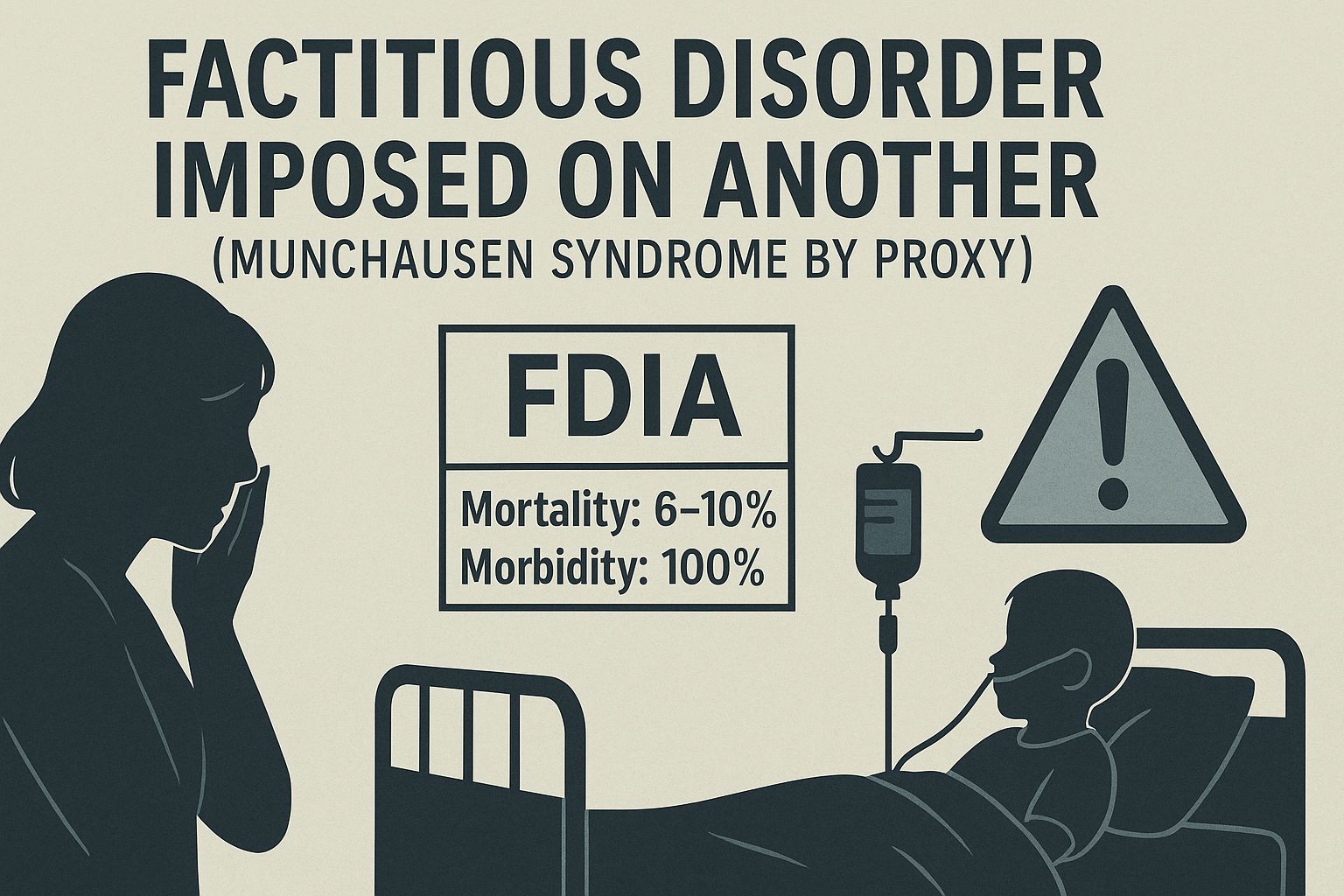
Factitious Disorder Imposed on Another (FDIA) in Finland: Unrecognised Maltreatment, Systemic Blind Spots, and the Failure of Victims' Legal Protection
A Multidisciplinary Analysis and Proposals for Action
I. ABSTRACT
Summary
Factitious Disorder Imposed on Another (FDIA), previously known as Munchausen syndrome by proxy, is a severe form of child maltreatment in which a caregiver fabricates, exaggerates, or actively induces illness in a person under their care. International research indicates a mortality rate of 6–10 percent and morbidity of 100 percent, making FDIA potentially the most lethal form of child abuse. In Finland, this phenomenon has not been systematically studied, leaving countless victims without proper identification, treatment, and legal protection.
This multidisciplinary article examines the challenges of recognising FDIA, systemic structural deficiencies, and manipulation strategies employed by perpetrators within the Finnish context. The article analyses diagnostic blind spots, communication gaps between healthcare, child protection services, and the legal system, as well as the significance of psychopathic traits in FDIA perpetrators. Particular attention is given to the pre-emptive strike strategy, whereby the perpetrator discredits the victim or their advocate before their own exposure.
The article presents concrete protocol recommendations for improving diagnostics, developing multiprofessional collaboration, and strengthening victims' legal protection. Additionally, guidance is provided for victims and their families regarding the importance of documentation and information acquisition.
The conclusion states that the failure to identify FDIA is not merely an error by individual professionals but a structural problem requiring political will, resources, and courage to reform current practices. A child's right to life, health, and safety is absolute, and the system must overcome its own denial to protect this right.
Keywords: FDIA, Factitious Disorder Imposed on Another, Munchausen syndrome by proxy, child maltreatment, psychopathy, parental alienation, custody harassment, child protection, diagnostics, manipulation, legal protection
Abstract
Factitious Disorder Imposed on Another (FDIA), previously known as Munchausen syndrome by proxy, is a severe form of child maltreatment in which a caregiver fabricates, exaggerates, or actively induces illness in a person under their care. International research indicates a mortality rate of 6–10% and morbidity of 100%, making FDIA potentially the most lethal form of child abuse. In Finland, this phenomenon has not been systematically studied, leaving countless victims without proper identification, treatment, and legal protection.
This multidisciplinary article examines the challenges of FDIA recognition, systemic structural deficiencies, and manipulation strategies employed by perpetrators within the Finnish context. The article analyzes diagnostic blind spots, communication gaps between healthcare, child protection services, and the legal system, as well as the significance of psychopathic traits in FDIA perpetrators. Particular attention is given to the pre-emptive strike strategy, whereby perpetrators discredit victims or their advocates before their own exposure.
The article presents concrete protocol recommendations for improving diagnostics, developing multiprofessional collaboration, and strengthening victims' legal protection. Additionally, guidance is provided for victims and their families regarding the importance of documentation and information acquisition.
The conclusion states that failure to identify FDIA is not merely an error by individual professionals but a structural problem requiring political will, resources, and courage to reform current practices. A child's right to life, health, and safety is absolute, and the system must overcome its own denial to protect this right.
Keywords: FDIA, Factitious Disorder Imposed on Another, Munchausen syndrome by proxy, child maltreatment, psychopathy, parental alienation, custody harassment, child protection, diagnostics, manipulation, legal protection
II. INTRODUCTION
2.1 Background and Significance
Factitious Disorder Imposed on Another (FDIA) represents a form of maltreatment that fundamentally challenges our understanding of parenthood, caregiving, and trust. In this disorder, a caregiver — typically a child's parent — fabricates or induces illness in a person under their care in order to receive attention, sympathy, or other psychological gratification. The perpetrator typically presents as an exceptionally attentive and devoted parent, which makes recognition particularly difficult.
International research shows FDIA to be one of the most lethal forms of child abuse. Mortality rates range between 6 and 10 percent, and morbidity is effectively 100 percent, as every victim suffers either physical or psychological consequences. In light of these figures, it is alarming that the subject has not been systematically studied in Finland.
A 2018 review article in the Finnish Medical Journal states unequivocally: "No Finnish studies on the subject were found." This statement is based on a systematic literature search covering international databases. The research gap does not mean FDIA does not occur in Finland. It means that cases are not being identified or documented correctly, diagnostic criteria are unknown to many professionals, there is no reliable data on the scope of the phenomenon, and victims' legal protection remains unrealised.
British paediatrician Chris Hobbs put it aptly: "Where child abuse is concerned, the main obstacle to the effective protection of the child remains the denial of the problem in all its forms." This denial manifests at both the individual level — where professionals refuse to believe a parent could harm their child — and at the systemic level — where structural deficiencies allow maltreatment to continue.
The significance of this article lies in serving as a bridge between international research and Finnish practice. The article brings together scattered knowledge, analyses the specific features of the Finnish system, and presents concrete proposals for remedying the situation.
2.2 Definition of Terms
2.2.1 Factitious Disorder Imposed on Another (FDIA)
FDIA is a mental health disorder defined in both the DSM-5 classification (code 300.19) and the ICD-11 classification (code 6D51). The World Health Organization defines FDIA as a condition characterised by "the falsification, fabrication, or induction of physical, psychological, or behavioural signs, symptoms, or injuries in another person, most commonly a child."
FDIA differs from Factitious Disorder Imposed on Self, in which a person fabricates or induces symptoms in themselves. In FDIA, the victim is another person — most often the perpetrator's child, though the victim may also be an elderly person, a person with disabilities, or another individual in a care relationship.
Central to the definition of FDIA is that the perpetrator's motive is not external gain — such as financial benefit or relief from responsibilities — but an internal psychological need. This distinguishes FDIA from malingering, where the motive is clearly external.
2.2.2 Parental Alienation
Parental alienation refers to conduct in which a parent systematically seeks to alienate a child from their other parent. Alienation may include denigrating the other parent, manipulating the child against them, preventing contact, and distorting the child's beliefs.
Parental alienation is recognised as a form of psychological violence that harms both the child and the alienated parent. In Finland, alienation is estimated to occur in approximately 10 percent of all separations and 20–27 percent of prolonged custody disputes.
2.2.3 Custody Harassment
Custody harassment is a concept closely related to alienation, encompassing the broader pattern of systematic bullying and harassment following separation. Custody harassment may include filing repeated unfounded child protection reports, misusing legal proceedings, damaging the other parent's reputation, and using the child as an instrument to harm the other parent.
Under Finnish law, custody harassment and alienation have been found to be punishable offences, but there is no uniform sanctions practice. This creates a situation where the perpetrator has, in practice, nothing to lose.
2.2.4 Psychopathy and Manipulative Behaviour
Psychopathy is a personality disorder characterised by a lack of empathy, superficial charm, manipulativeness, externalisation of responsibility, and impulsivity. Psychopathic traits are significant in understanding FDIA because they explain the perpetrator's ability to maintain a credible façade while systematically harming their victim.
Not all FDIA perpetrators are psychopaths, and not all psychopaths commit FDIA. However, the presence of psychopathic traits makes recognition particularly difficult and manipulation particularly effective.
2.3 Article Structure
This article is divided into five main sections that together form a comprehensive analysis of FDIA in the Finnish context.
The first section (chapters I–V) addresses the theoretical framework, diagnostic blind spots, and systemic structural flaws. This section lays the foundation for understanding the phenomenon and identifies the key problem areas.
The second section (chapters VI–VIII) delves into manipulation strategies, the double bind and the victim's position, and analyses the challenges surrounding unidentified and wrongfully convicted cases.
The third section (chapters IX–X) examines Finland's specific situation and analyses the vicious cycle that prevents progress.
The fourth section (chapters XI–XIV) presents concrete protocol proposals, guidance for victims, professional training recommendations, and structural reform proposals.
The fifth section (chapters XV–XVI) draws together the conclusions and presents the bibliography.
III. THEORETICAL FRAMEWORK
3.1 FDIA: Definition, Epidemiology, and Manifestations
3.1.1 Diagnostic Criteria
The DSM-5 (Diagnostic and Statistical Manual of Mental Disorders, Fifth Edition) defines FDIA according to the following criteria:
Criterion A: Falsification of physical or psychological signs or symptoms, or induction of injury or disease, in another person, associated with identified deception.
Criterion B: The individual presents another person (the victim) to others as ill, impaired, or injured.
Criterion C: The deceptive behaviour is evident even in the absence of obvious external rewards.
Criterion D: The behaviour is not better explained by another mental disorder, such as delusional disorder or another psychotic disorder.
In the ICD-11 classification, FDIA (code 6D51) is described as a condition in which a person feigns, falsifies, or induces physical, psychological, or behavioural signs, symptoms, or injuries in another person. The classification emphasises that the perpetrator's motive is an internal psychological need, not external gain.
Both classification systems stress that FDIA is a mental health disorder of the perpetrator, but the victim is another person. This distinguishes FDIA from most other mental health disorders and makes it particularly grave, as it causes direct harm to another human being.
3.1.2 Epidemiology
The true prevalence of FDIA is difficult to estimate precisely because cases so often go unrecognised. International estimates vary, but the generally accepted figure is approximately 0.5–2 cases per 100,000 children under 16 years of age annually. This figure likely represents only the tip of the iceberg.
The mortality figures are sobering. In international meta-analyses, FDIA mortality has been estimated at 6–10 percent. This makes FDIA potentially the most lethal form of child abuse. By way of comparison, the mortality rate for physical abuse is considerably lower.
Morbidity is effectively 100 percent. Every victim of FDIA suffers either physical harm, psychological consequences, or both. According to a study published in the Journal of Pediatric Health Care, 50 percent of victims have long-term health problems, and a significant proportion suffer permanent injuries.
In Sheridan and colleagues' review of 415 cases, a fatal outcome was observed in 6 percent of cases and prolonged or permanent disability in 7.3 percent. In another systematic review of 796 cases, 7.6 percent of victims died and 35.6 percent were subjected to extensive medical investigations and procedures.
It is worth noting that the most severe cases are more likely to be reported, while milder cases go unrecognised. The true prevalence is therefore presumably considerably higher than the statistics suggest.
3.1.3 Methods
The methods of FDIA can be divided into three main categories: fabrication, exaggeration, and induction.
Fabrication means inventing symptoms and reporting them falsely to healthcare professionals. The perpetrator describes symptoms the child does not actually have or distorts the child's behaviour and condition. Fabrication can be difficult to detect because it leaves no physical traces on the child.
Exaggeration means inflating real symptoms to appear more severe than they actually are. For example, a child may suffer from a mild allergic symptom, which the perpetrator presents as life-threatening anaphylaxis. Exaggeration leads to unnecessary investigations, treatments, and procedures.
Induction is the most severe form of FDIA, in which the perpetrator actively produces illness in the child. Induction can occur through several means:
Poisoning is one of the most common forms of induction. Substances used include salt (causing hypernatraemia, seizures, and brain damage), insulin (causing hypoglycaemia and loss of consciousness), ipecac syrup (causing vomiting and myocardial damage), laxatives (causing diarrhoea and electrolyte imbalances), antihistamines (causing drowsiness and confusion), as well as various prescription medications or heavy metals.
Suffocation refers to repeated, brief obstruction of breathing, which can cause hypoxic brain damage, neurodevelopmental disorders, seizures, and cognitive deficits. Brain tissue is extremely sensitive to oxygen deprivation, and cellular damage begins within minutes.
Inducing infections occurs by injecting faeces, blood, or bacteria into intravenous lines, contaminating wounds, or tainting catheters. This leads to repeated "unexplained" infections and, in the worst cases, sepsis.
3.2 Profile of the FDIA Perpetrator
3.2.1 Typical Characteristics
Identifying the FDIA perpetrator is made difficult by the fact that perpetrators typically present as representatives of a "model family." The perpetrator is often an apparently exceptionally attentive and devoted parent who spends a great deal of time with the child in hospital, knows medical terminology, and actively participates in the child's care.
Perpetrators frequently have healthcare training or work experience. This provides them with both knowledge of how to induce illness and credibility in the eyes of professionals. Medical knowledge enables a convincing description of symptoms and complicates identification.
Perpetrators typically have strong command of social conventions and know how to build a trusting relationship with healthcare staff. They may bring gifts to the ward, publicly thank staff, and construct an image of themselves as the ideal parent.
3.2.2 Psychopathic Traits in FDIA Perpetrators
Although not all FDIA perpetrators meet the diagnostic criteria for psychopathy, many exhibit significant psychopathic traits. Understanding these traits is central to recognition.
Manipulative ability is the most critical trait of FDIA perpetrators. They are capable of maintaining a credible façade while systematically harming their victim. They can read other people and adjust their behaviour to the situation. They know what professionals want to hear and can present it convincingly.
Lack of empathy enables the perpetrator's ability to repeatedly cause suffering to their own child. In normal parenting, a child's pain and fear trigger a strong empathic response that prevents causing harm. In FDIA perpetrators, this braking mechanism is absent or severely impaired.
Superficial charm is typical of FDIA perpetrators. They are often socially skilled, agreeable, and persuasive. This charm confuses professionals, who cannot connect pleasant behaviour with the capacity for severe maltreatment.
Externalisation of responsibility manifests in the perpetrator's way of avoiding accountability for their actions. When suspicion arises, the perpetrator typically blames others: doctors, nurses, the other parent, the child themselves, or "fate." The perpetrator never acknowledges their own role.
3.2.3 Motives
The motives of FDIA perpetrators are varied and often overlapping. What unites all perpetrators, however, is that the motive is an internal psychological need rather than external gain.
Need for attention and sympathy is the most common motive. As the parent of a sick child, the perpetrator receives attention, sympathy, and admiration. They are the "hero" who selflessly cares for their sick child. This fulfils the perpetrator's pathological need for attention.
Power and control motivate perpetrators who enjoy their ability to control both the child and the healthcare system. The perpetrator decides when the child is sick and when they recover. They control what professionals know and believe.
Financial gain can be a secondary motive, even if it is not the primary one. A parent of a sick child may receive social benefits, exemptions from work, and financial support. These benefits can sustain the behaviour even if they were not the original motive.
Revenge is a motive particularly in situations where FDIA is linked to a custody dispute. The perpetrator may harm the child as retaliation against the other parent or as a means of obtaining full custody. In such cases, the child is an instrument in the conflict between parents.
3.3 Parental Alienation and Custody Harassment
3.3.1 Definitions and Prevalence in Finland
Parental alienation and custody harassment are phenomena closely related to FDIA, particularly in the context of custody disputes. While they are not the same thing as FDIA, they can co-occur and reinforce each other.
The statistical background in Finland is significant. Approximately 30,000 Finnish children experience their parents' separation each year. In 2015–2016, 2,582 contested custody and visitation cases were heard in district courts. In 2016, 1,694 escalated separation situations were recorded. From these figures, it can be estimated that alienation occurs in a significant proportion of cases.
Research indicates that alienation occurs in approximately 10 percent of all separations. In prolonged custody disputes, the proportion rises to 20–27 percent. It is particularly concerning that 67 percent of families involved in custody disputes are also child protection clients, which demonstrates the severity and scope of the phenomenon.
3.3.2 Links Between FDIA and Alienation
FDIA and parental alienation share several common features, which makes distinguishing them challenging but also underscores their severity:
| Feature | FDIA Perpetrator | Alienating Parent |
|---|---|---|
| Public role | "Excellent, devoted parent" | "Champion of the child's rights" |
| Manipulation of authorities | Deceiving doctors | Deceiving child protection services |
| Fabrication | Inventing illnesses and symptoms | Inventing abuse allegations |
| Instrumentalising the child | Gaining attention and sympathy | Harming the other parent |
| Obstructing detection | "Doctor shopping" | Repeated reports to different agencies |
| Silencing the victim | Child does not understand they are a victim | Child is manipulated against their parent |
The similarity of these features is not coincidental. In both phenomena, the perpetrator uses the child as an instrument to satisfy their own psychological needs and uses the system as a means to achieve their goals.
3.3.3 Weaponising Child Protection
A particularly troubling feature is the weaponisation of the child protection system. Taken to its extreme, an alienating parent or FDIA perpetrator may employ surveillance through the other parent's phone, unfounded criminal reports, repeated child protection reports, and hinting at incest or physical abuse allegations to authorities, loved ones, or the child.
Sometimes a parent is prepared to make outright fabricated allegations against the other parent, in extreme cases accusing them of physical abuse or sexual exploitation. This creates a critical paradox: the very system designed to protect children from maltreatment can be turned into a weapon against innocent parents or used to conceal actual maltreatment.
3.4 International Research Evidence
3.4.1 Southall's Covert Video Surveillance Study (1997)
One of the most groundbreaking FDIA studies was conducted in the United Kingdom in the 1990s. The study used covert video surveillance on 39 children suspected of being victims of induced illness. The results were devastating.
Cameras revealed abuse in 33 of 39 cases — a confirmation rate of 85 percent. Thirty cases documented deliberate suffocation. Poisonings with disinfectants and anticonvulsants, deliberate fractures, and other emotional and physical violence were also observed.
What was particularly shocking was that four patients who had been subjected to repeated suffocation attempts before surveillance had permanent neurological damage and required anticonvulsant medication due to hypoxia-induced brain injury.
The study demonstrated that when FDIA is suspected, the suspicion is most often justified. It also showed how severe the injuries suffered by victims are before the maltreatment is identified.
3.4.2 Sibling Death Studies
Sibling deaths are one of the darkest dimensions of FDIA. Research has shown that when a family has experienced one unexplained child death, the risk to subsequent children is significantly elevated if FDIA is involved.
Studies have shown that fatal child maltreatment accounts for 1–5 percent of cases classified as SIDS (Sudden Infant Death Syndrome). The mechanism may be closed head injury, trauma, deliberate suffocation, or poisoning. Post-mortem examination cannot distinguish between accidental suffocation, deliberate suffocation, and SIDS.
This diagnostic impossibility creates a situation in which some murders go entirely unrecognised and are classified as natural deaths.
3.4.3 The Wrongfully Convicted: Meadow's Law and Its Consequences
British paediatrician Roy Meadow articulated a principle known as Meadow's Law: "One sudden infant death in a family is a tragedy, two is suspicious, and three is murder, unless proven otherwise."
This principle led to the conviction of several mothers for the murder of their children. It later emerged that some of these convictions were wrong.
Kathleen Folbigg is an Australian woman who was wrongfully convicted in 2003 of murdering her four children. She spent 20 years in prison before being pardoned in 2023 following a lengthy legal campaign. Genomic testing revealed that at least two of her children likely died from a previously unknown genetic mutation that led to cardiac complications.
This case demonstrates how dangerous it is to draw conclusions without sufficient scientific evidence. Genetically explainable deaths currently account for one third of sudden and unexpected infant deaths, and this proportion is expected to grow as research advances.
In the context of FDIA, this means the system must be capable of both identifying genuine maltreatment cases and protecting the innocent from false accusations. Both failures are grave: unidentified maltreatment leads to the continued suffering or death of the victim, while a false accusation destroys an innocent person's life.
IV. DIAGNOSTIC BLIND SPOTS
4.1 Medical Deficiencies
4.1.1 The Insufficiency of Vital Signs
Current healthcare relies heavily on measuring vital signs. Pulse, blood pressure, temperature, and oxygen saturation are the primary assessment tools. These measurements are valuable in evaluating acute situations, but they are insufficient for detecting FDIA.
Vital signs can be entirely normal even while serious damage is occurring within the child's body. Chronic low-dose poisoning does not necessarily show up immediately in vital signs. Intracellular damage can progress without external indicators. Cumulative harm builds over time in ways that individual measurements do not reveal.
For example, repeated brief suffocation can cause hypoxic brain injury that does not appear in vital signs between episodes. A child may appear perfectly healthy at the time of examination, even though they have suffered repeated oxygen deprivation-related brain damage.
4.1.2 Limitations of Toxicological Screening
Routine drug screens are designed to identify the most common substances of abuse, not the agents typically used in FDIA. This is a significant diagnostic gap.
Insulin does not appear in standard screenings. Determining the cause of hypoglycaemia requires specialised tests, such as simultaneous measurement of insulin and C-peptide. Without these tests, deliberate insulin administration can go entirely undetected.
Salt shows up only in electrolyte panels, but hypernatraemia is not necessarily linked to maltreatment. It is easily interpreted as an "unexplained" finding or a metabolic dysfunction.
Ipecac syrup, traditionally used to induce vomiting, requires a specialised test for detection. It is not included in routine screenings.
Many prescription medications go undetected in standard drug screens. A perpetrator can use their own or externally obtained medications to poison a child without it being revealed through routine testing.
A negative drug screen, therefore, does not rule out poisoning. This is a critical knowledge gap that can lead to FDIA being dismissed in diagnostic assessment.
Furthermore, the detection window for blood-based drug testing is very short — often only a few hours after exposure. Chronic low-dose poisoning easily goes undetected because the sample collection does not fall within the exposure window.
Hair sample analysis enables the identification of chronic exposure over a period of months, but it is rarely used. Hair sample testing is expensive and not part of routine practice.
4.1.3 Delayed Detection of Hypoxia
In acute hypoxic brain injury, CT imaging can appear relatively normal even though the damage has already occurred. CT is effective for identifying acute haemorrhage and large structural abnormalities, but it is insensitive to early hypoxic changes.
MRI is considerably more sensitive for detecting hypoxic injuries, but it is rarely used as a first-line investigation. MRI is more expensive, more time-consuming, and often requires sedation of the child. These practical barriers mean that the more sensitive investigation is often left undone.
Brain injury biomarkers — such as S-100B, NSE (neuron-specific enolase), and GFAP (glial fibrillary acidic protein) — could aid in detecting hypoxic injury, but they are not used routinely. These biomarkers can indicate brain tissue damage even when imaging findings are normal.
4.1.4 Overlooking the Aetiology of Infections
When a child develops repeated infections, the focus of treatment is typically on treating the infection, not on determining its origin. An antibiotic course is started, the infection resolves, and the child is discharged — until the next infection appears.
Rarely does anyone ask where the bacteria are coming from. Repeated "unexplained" infections are not connected to maltreatment. Yet certain findings should trigger immediate suspicion.
Polymicrobial infections — where multiple bacterial species are found in the same focus of infection — are atypical in naturally occurring infections. Faecal bacteria in the blood or in an intravenous line are a highly suspicious finding. Recurrent infections at the same site, for example in a central venous catheter, may indicate deliberate contamination.
Forensic microbiological analysis, which traces the origin of bacterial strains, could reveal deliberate contamination, but such analysis is rarely performed.
4.2 Professional Knowledge Gaps
4.2.1 Gaps in Training
FDIA is not systematically included in the basic training of doctors, nurses, or social workers in Finland. Professionals may graduate without knowing what FDIA is, how it presents, or how it should be suspected.
The treatment of psychopathy in training is often superficial. Professionals do not learn to recognise manipulative behaviour or understand how a psychopathic individual can exploit their trust.
Skills for recognising manipulation are almost entirely absent. Professionals are trained to trust patients and their families, but they are not trained to recognise situations where this trust has been abused.
4.2.2 Psychological Barriers to Recognition
Professionals face significant psychological barriers in recognising FDIA. Understanding these barriers is essential to overcoming them.
Cognitive dissonance arises when a professional must reconcile two incompatible perceptions: "this is a careful and loving parent" and "this parent may be harming their child." This conflict is so powerful that the mind seeks to resolve it by rejecting one of the perceptions. Typically, the suspicion is rejected because it is the more uncomfortable option.
The "a mother cannot harm her child" assumption is a deeply rooted cultural belief that prevents suspicion from arising. Motherhood is seen as sacred and protective, and the idea of a mother as the one harming her child is so shocking that it is difficult even to consider.
The effect of the perpetrator's charm is a concrete barrier. FDIA perpetrators are typically socially skilled and agreeable. The professional likes the perpetrator, and this personal fondness impedes objective assessment.
Fear of accusations prevents intervention. A professional fears that if they raise a suspicion that proves unfounded, they will face legal consequences or lose their reputation. This fear is often greater than the concern that maltreatment will go undetected.
4.2.3 Collegial Blindness
Healthcare professionals trust one another. When a colleague has made an assessment, it is rarely questioned. This collegial trust is generally beneficial, but in the context of FDIA, it can be harmful.
If the FDIA perpetrator is themselves a healthcare professional, collegial trust can be especially strong. A doctor or nurse automatically receives credibility that a layperson parent would not. This credibility can shield the perpetrator from suspicion.
Additionally, professionals may accept each other's documentation without questioning it. If a previous contact has recorded the parent's account of symptoms as fact, the next professional may take this as given without critical evaluation.
4.3 Documentation Problems
4.3.1 Fragmentation of Patient Records
In Finland, patient records are scattered across different systems. Although the Kanta archive has improved the situation, not all records are available to all care providers in real time. Different hospital districts, private healthcare providers, and public healthcare use different systems.
This fragmentation enables "doctor shopping." An FDIA perpetrator can take the child to different doctors in different locations, and no one sees the full picture. Individual visits appear justified, but the totality would reveal a suspicious pattern.
Different specialities do not communicate sufficiently with one another. The paediatrician sees their own visits, the paediatric neurologist theirs, the paediatric surgeon theirs. No one assembles the full picture where repeated symptoms across multiple specialities would be visible as a systematic pattern.
4.3.2 Failure to Detect "Doctor Shopping"
No centralised registry of repeated care contacts exists. Although information systems would theoretically make the collection of such data possible, in practice it is not done systematically.
No automated alert systems are in use. The system does not alert anyone if a child has visited five different hospitals within six months. Such a pattern goes unnoticed unless a particular professional happens to look for it specifically.
Detection is left to chance. It depends on an individual professional's initiative, curiosity, and available time. There is no systematic screening.
4.3.3 Weaknesses in Documentation Practices
Documentation practices in patient records contain deficiencies that hinder FDIA detection.
Subjective interpretations vs. objective observations: Records often include the parent's account directly without critical evaluation. "Mother reports the child has had seizures at home" is recorded as fact, even though no professional has witnessed the seizures. An objective observation would be: "No seizures observed during the visit. Mother reports seizures occurring at home."
Uncritical recording of the parent's account: Professionals are trained to trust the parent's account of a child's symptoms. This is generally justified, but in the case of FDIA it leads to the perpetrator's fabricated symptoms being recorded in the patient record as facts.
The possibility of documentation manipulation: The perpetrator can influence what is recorded by presenting their case in a particular way. A skilled manipulator knows how to tell their story so that it sounds credible and is recorded in the patient file in the way they desire.
V. SYSTEMIC STRUCTURAL FLAWS
5.1 Healthcare Fragmentation
5.1.1 Silo Structure
Finnish healthcare is organised by speciality. Paediatric medicine, child psychiatry, paediatric neurology, paediatric surgery, and other specialities operate in their own units. This specialisation is medically justified, but it creates silos that hinder holistic assessment.
When a child presents with varied symptoms, they may be a patient of multiple specialities simultaneously. Each speciality views the child from its own perspective, but the overall picture remains unformed. No one asks: "Why does this child have problems in so many areas?"
The silo structure also impedes information flow. Information moves within a speciality, but communication between specialities is inadequate. The paediatric neurologist may not know what the paediatric surgeon has observed, and vice versa.
5.1.2 The Missing Overview
Recognising FDIA requires forming an overview. Individual symptoms and care contacts may appear justified, but the totality reveals a suspicious pattern: recurring symptoms that cannot be explained by any identified illness, symptoms improving in hospital and worsening at home, and a parent displaying unusual interest in medical details.
In the current system, forming this overview falls to the individual professional — their responsibility and initiative. The system does not support this and provides no tools for it. A professional must independently seek information from different sources, which takes time and requires resources that are often unavailable.
5.2 Challenges in Child Protection
5.2.1 The Categorisation Problem
The child protection system categorises situations dichotomously. "Custody dispute" is a matter between parents, which child protection does not address. "Maltreatment" is a child protection matter that is addressed. This dichotomy is problematic for FDIA.
If the child is physically ill, the situation is interpreted as a medical problem that belongs to healthcare. If the parents are fighting about the child's care, the situation is interpreted as a custody dispute in which child protection has no jurisdiction. If a parent is fabricating or inducing illness, there is no clear category into which the situation fits.
This categorisation problem leads to FDIA cases falling between the cracks. Healthcare treats the symptoms, child protection does not consider it their concern, and the legal system does not receive sufficient evidence. No one takes overall responsibility.
5.2.2 Chronic Understaffing and Overload
Child protection is chronically overloaded. Social workers have too many clients, too little time, and too few resources. In this situation, thorough investigation often goes undone.
When resources are limited, they are directed to more acute situations. FDIA, where the child may appear outwardly quite healthy and the parent exceptionally attentive, does not necessarily rise high on the priority list. More visible maltreatment — such as physical abuse or severe neglect — receives greater attention.
Superficial assessments are the inevitable consequence of overload. When time is scarce, assessments focus on externally visible features. FDIA, which requires deep analysis and holistic examination, is easily overlooked.
5.2.3 Quality of Documentation
Significant problems have been identified in child protection documentation. Instead of precise documentation of established facts, what gets recorded are perceptions, concerns, opinions, and impressions. This is problematic both for legal protection and for FDIA detection.
The problems with documentation are particularly acute in emergency placements. Decisions are not based on documented facts but on opinions, perceptions, and concerns. A child can be taken into placement on these grounds without the decision being supported by documented objective observations.
This weakness in documentation can work against innocent parents if they are labelled without basis, and against FDIA victims if the perpetrator's manipulation is recorded as fact.
5.2.4 Difficulty of Recognition and Intervention
Alienation is recognised in child protection, but it is difficult to address. According to a leading social worker in the City of Espoo, child protection does not have the authority to act in situations that concern solely a dispute between parents without giving rise to child protection concerns.
This jurisdictional limitation is problematic. Alienation and custody harassment are harmful to the child regardless of whether they trigger "child protection concerns," but if the phenomenon is not recognised as maltreatment, it cannot be addressed.
Social work often holds a key role in custody disputes, but experiences with social authorities are predominantly negative. The harassment is not recognised and not addressed. This points to deficiencies in both competence and authority.
5.3 Gaps in the Legal System
5.3.1 Problems with the Threshold of Evidence
Psychological violence is difficult to prove. Proving FDIA in court requires evidence that is often hard to obtain. The perpetrator is typically the sole witness to their own actions, and the victim — often a small child — is unable to testify.
Medical documentation is often insufficient from an FDIA perspective. Patient records describe symptoms and treatments, but they do not contain an assessment of whether the symptoms are genuine or induced. Reconstructing what actually happened after the fact is difficult.
The perpetrator's word against the victim's word is the typical scenario. The perpetrator often has years of documented history as a "caring parent," while the victim (the other parent or other person raising suspicions) may appear paranoid or confrontational.
5.3.2 Underdeveloped Forensic Protocols
Standardised forensic medical protocols for confirming FDIA as a cause of death in post-mortem evaluations do not exist. This diagnostic vacuum results largely from the heterogeneity of clinical presentations, which continues to prevent definitive conclusions in suspected fatal cases.
Post-mortem examination cannot distinguish between accidental suffocation, deliberate suffocation, and SIDS. Certain poisons do not appear in post-mortem toxicological examination. Concealed maltreatment may go entirely undetected even after death.
5.3.3 Lack of a Sanctions System
While Finnish law has found custody harassment and alienation to be punishable offences, there is no uniform sanctions practice. Case law is full of loopholes. The best interests of the child are, in practice, whatever the judge imagines them to be at any given moment.
Actions that clearly run counter to the child's best interests — such as alienation and custody harassment — carry less weight in determining the child's interests than established circumstances or the fact that one parent simply feeds and clothes the child. This means the perpetrator can continue their behaviour with virtually no consequences.
The alienating parent has nothing to lose, because from their perspective the worst that could happen is that the other parent receives the right to see their child. This incentive structure is perverse: it favours the perpetrator and punishes the victim.
5.4 The Political Level and International Obligations
5.4.1 European Court of Human Rights Judgments
Between 1994 and 2008, Finland received 74 adverse rulings from the European Court of Human Rights — more than all other Nordic countries had received in the same period combined. This is a striking statistic that speaks to structural problems.
The distribution of the rulings reveals the problem areas. 60 percent of the rulings relate to Article 6 — the right to a fair trial. 15 percent relate to Article 8 — the right to respect for family life. Both are central in the context of FDIA cases.
Currently, a total of 19 ECtHR judgments against Finland remain open, of which 10 are so-called leading cases. A leading case refers to a case that has raised new structural problems requiring general reforms, such as legislative or other significant changes.
The European Court of Human Rights has issued a total of 15 rulings concerning Finland in child protection-related human rights complaints. In the case of K.A. v. Finland, the Court found a violation of Article 8 in that the authorities had not taken sufficient measures to reunite the family.
5.4.2 Delays in Implementation
The Finnish Human Rights Centre has raised concerns about delays in the implementation of several ECtHR judgments against Finland and decisions of the European Committee of Social Rights.
A total of seven decisions of the European Committee of Social Rights concerning Finland remain open. The Committee has in several cases reviewed the state of implementation and requested additional information from the government two to three times.
This suggests that although international courts identify problems, Finland does not correct them swiftly or effectively enough. Structural problems persist despite the rulings.
5.4.3 Evasion of Responsibility
At the political level, evasion of responsibility is documented. Minister of Family Affairs and Social Services Juha Rehula responded to a written question (KK 471/2016) on custody harassment and alienation as follows:
"The alienation and custody harassment referred to in the written question may, in certain situations, constitute psychological violence in the sense described above. However, this requires case-by-case assessment, and a general position cannot be taken on the matter."
Member of Parliament Juho Eerola summed up the problem: "What remains unanswered is who is responsible for that case-by-case assessment and what must be done to ensure that assessment actually takes place."
This is textbook evasion of responsibility. The problem is acknowledged, but no responsible party is named, and no concrete measures are proposed. The "case-by-case assessment" goes undone because no one is accountable for carrying it out.
5.4.4 The Weak Position of the Child
The position of children is weak compared to that of adults. Under the Coercive Measures Act, an adult citizen's liberty can be restricted only according to strict criteria. A detention request must be heard by a court without delay, and cases are processed within days.
An emergency placement, by contrast, can continue without court review — depending on the processing times of the administrative courts — for a very long time, in practice until the care order is resolved. This asymmetry between the legal protection of adults and children is concerning.
A maltreated child is almost never the only member of the family in need of help. The best interests of the child should clearly take priority over the interests of adults, because a child cannot defend their own rights. A child has the right to, and need for, special protection. In practice, this principle is not realised.
VI. MANIPULATION STRATEGIES AND SYSTEM EXPLOITATION
6.1 The Pre-emptive Strike
6.1.1 Constructing the Narrative
A psychopathic FDIA perpetrator often acts pre-emptively. They understand that exposure is possible and prepare for it by constructing a narrative that shields them from suspicion. This narrative construction may begin years before anyone even suspects maltreatment.
The central strategy is to label potential whistleblowers in advance. An FDIA perpetrator who fears the other parent will notice the unnatural pattern of the child's symptoms begins to systematically build an image of that parent as unstable, paranoid, or mentally ill. This happens subtly and over a long period of time.
The perpetrator may casually mention to healthcare professionals, friends, and relatives their concern about the other parent's "odd behaviour" or "mental health problems." They carefully document every situation in which the other parent has reacted emotionally or acted in a way that can be interpreted negatively. They create a paper trail that supports their narrative.
When suspicion eventually arises and the other parent tries to defend the child, the perpetrator's years of work bear fruit. The system sees "a concerned, devoted parent" and "an unstable, accusatory parent." The narrative has been constructed so carefully that the truth seems implausible.
6.1.2 Provocation and Documentation of the Reaction
The second dimension of the pre-emptive strike is active provocation. The perpetrator provokes the target into reacting emotionally and then documents that reaction as "evidence" of the target's instability.
In court, the manipulation can take strategic forms. The perpetrator may selectively comply with court orders to appear reasonable while covertly sabotaging them. They provoke the other parent to anger through emails or public scenes and then use that outburst as "evidence" that the other parent is the problem.
This strategy is particularly effective because it exploits the natural human response to injustice. When a person feels they are being treated unjustly, that their child is being harmed, and that no one believes them, a strong reaction is natural — but this natural reaction is turned against them.
The perpetrator remains calm and "reasonable" during the provocation. They have learned to control their own reactions and know that outward composure creates credibility. The target, meanwhile, appears outwardly as exactly the kind of unstable person the perpetrator has labelled them.
6.1.3 The Asymmetry of Documentation
FDIA perpetrators are typically exceptional documenters. They keep meticulous records of everything: the child's symptoms, the other parent's behaviour, conversations with professionals, dates, and times. This documentation is often impressively detailed and seemingly objective.
The target parent, by contrast, typically lives a normal life and does not document. They do not understand they are under attack and therefore do not collect evidence. By the time they finally become aware of the situation, they have no comparable paper trail.
This asymmetry of documentation is decisive in legal proceedings. The perpetrator has files full of "evidence," while the target has only their word. The system gives weight to documentation, and whoever has more and better documentation appears more credible.
Paradoxically, this very over-meticulous documentation can be a warning sign. Normal parents do not keep such detailed records of their daily lives — but recognising this warning sign requires professionals to be aware of FDIA dynamics.
6.2 System Manipulation
6.2.1 Instrumentalising Child Protection
The child protection system — designed to protect children — can be turned into a weapon. An FDIA perpetrator or custody harasser can file repeated child protection reports against the other parent, knowing that each report will be investigated and will leave a trace.
Even if the reports prove unfounded, they create a cumulative impression of problems. When five child protection reports have been made about the same parent, the system begins to see them as "problematic," even if none of the reports led to action.
The perpetrator can also leverage child protection decisions for their own purposes. If child protection makes a decision based on the perpetrator's narrative, that decision legitimises the narrative. "Even child protection is concerned" becomes evidence, even though child protection's concern was based on the perpetrator's false information.
A disturbed parent may recruit third parties through child protection, the courts, and law enforcement to create a malicious smear campaign. They falsely imply that the target parent has engaged in child abuse and neglect. They lie to school administrators and staff to restrict the target parent's participation in the child's school life. They present fabricated claims to authorities.
6.2.2 Deceiving Healthcare
Deceiving healthcare is at the core of FDIA. The perpetrator knows how to present symptoms convincingly, use correct medical terminology, and answer doctors' questions in a way that supports their account.
The perpetrator quickly learns which symptoms to describe to obtain the investigations and treatments they want. They know which symptoms lead to hospital admission, which to a specialist consultation, and which are dismissed. This knowledge enables effective manipulation of the system.
If a healthcare professional refuses to order further investigations, the FDIA perpetrator may threaten actions that would make the healthcare system appear negligent. "What if my child has a serious illness and you are not investigating it?" This use of implicit threats is often effective, as professionals fear errors and complaints.
Doctor shopping is a common strategy. If one doctor does not believe the perpetrator's account, they take the child to another. And a third. Until they find a doctor who believes them. That doctor's opinion then becomes "evidence" of the child's illness.
6.2.3 Exploitation of Professional Networks
When an FDIA perpetrator is themselves a healthcare professional, the possibilities for manipulation multiply. A professional automatically receives credibility that a layperson does not. Their word carries more weight, their assessments are respected, and their motives are rarely questioned.
A professional also has access to information, medications, and systems that a layperson does not. They know how the system works, where its weaknesses lie, and how to exploit them. They can consult colleagues "informally" and steer their assessments in the desired direction.
Collegial trust acts as a defensive wall. Professionals trust each other and rarely question a colleague's assessments or motives. If the FDIA perpetrator is a respected doctor or nurse, raising suspicion against them is especially difficult. Who dares accuse a respected professional of child maltreatment?
6.3 Pathologising the Target
6.3.1 Building a Mental Health Label
One of the most effective manipulation strategies is pathologising the target: labelling the other parent or other person raising suspicions as mentally ill. Once the target has been labelled "sick," everything they say can be interpreted as symptoms rather than facts.
A high-conflict parent may rewrite history, deny obvious truths, and blame the other parent for everything. Over time, this psychological abuse erodes the target parent's self-confidence and mental health. Ironically, the stress caused by the perpetrator can genuinely lead to mental health symptoms, which "proves" the perpetrator's narrative correct.
Building the mental health label happens on multiple levels. The perpetrator talks about the target's "problems" to relatives, friends, neighbours, and professionals. They express concern about the target's coping, mental health, and ability to care for the child. Each conversation leaves an impression in the listener's mind.
Once enough people have heard the perpetrator's concern, a collective perception of the target's problems emerges. This perception affects how professionals interpret the target's behaviour. Active self-defence is seen as "paranoia." Emotional reaction is seen as "instability." Fatigue and exhaustion are seen as "incapacity."
6.3.2 Destroying Credibility
Destroying the target's credibility is a necessary component of the manipulation. If the target can credibly tell the truth, the perpetrator is exposed. Therefore, the perpetrator must ensure that the target is not believed.
The target parent is often socially isolated. The high-conflict individual may have smeared their reputation among friends, family, and professionals by portraying them as violent or provocative. When the target tries to tell the truth, no one believes them, because everyone already "knows" what they are like.
The perpetrator may also engage in gaslighting the target parent. They deny previous agreements, rewrite history by claiming they never said something, and stage situations to make the other parent appear unstable. This psychological abuse undermines the target's own perception of reality.
After the destruction of credibility, the target is effectively defenceless. They can tell the truth, but no one believes them. They can present evidence, but it is interpreted as a manifestation of "paranoia." They are trapped with no way out.
6.4 Coordinated Action: Multiple Perpetrator Dynamics
6.4.1 Alliance of Psychopathic Actors
A particularly dangerous situation arises when two or more psychopathic actors form an alliance. Such an alliance can occur when two individuals find in each other the same values, the same goals, and the same willingness to use immoral means.
The alliance may be based on a common enemy — such as the other parent, who poses a threat to both. It may be based on mutual benefit — such as financial advantage or a position of power. It may also be based on psychological compatibility: two manipulators recognise each other and begin to collaborate.
Such an alliance is especially dangerous because it multiplies the capacity for manipulation. Two perpetrators can coordinate their actions, support each other's narratives, and complement each other's abilities. They may take different roles: one operating behind the scenes, the other on stage.
6.4.2 Forms of Cooperation
Coordinated FDIA can manifest in many ways. One perpetrator may fabricate or induce the illness, while the other acts as an "expert" who confirms the fabricated illness. One may file child protection reports, while the other acts as a "concerned third party" who supports the content of the report.
Division of roles enables more effective manipulation. When two apparently separate parties tell the same story, it appears more credible. Professionals may not see the connection between the perpetrators and thus do not recognise the coordination.
Information exchange between perpetrators can be extensive. They may share information about what professionals have said, which strategies are working, and where the system's weaknesses lie. This information exchange improves their ability to manipulate the system.
6.4.3 Specific Challenges of Detection
Detecting coordinated FDIA is more difficult than uncovering the actions of a single perpetrator. Professionals may encounter the perpetrators separately and not see the connection between them. Narratives appear to come from different sources, which increases their credibility.
When the system eventually begins to suspect one perpetrator, the other can act as a "defender" and redirect suspicion elsewhere. The perpetrators can also sacrifice one to protect the whole: allow one to be caught for a lesser offence so that the larger manipulation continues.
An increasingly complex manipulation network makes grasping the overall picture nearly impossible without systematic analysis. Each professional sees only their own piece, and no one sees the entire web.
VII. THE DOUBLE BIND AND THE VICTIM'S POSITION
7.1 The Double Bind
7.1.1 The Anatomy of an Impossible Choice
The double bind is a situation in which the victim is trapped between two impossible options. Either choice leads to a negative outcome. This is the typical situation of FDIA victims and their advocates.
The target parent who suspects their child is being maltreated faces an impossible choice. If they remain silent, the maltreatment of the child continues. Alienation progresses. The child's health and wellbeing suffer. The system sees a "disengaged parent" who does not respond to the child's problems.
If they act and report their suspicions, they are labelled "paranoid." Their accusations "confirm" the mental health narrative the perpetrator has constructed. The system sees a "high-conflict parent" making false accusations. Their contact with the child may be restricted "to protect the child."
Either choice leads to defeat. The perpetrator has constructed a trap from which there is no escape by ordinary means.
7.1.2 System Interpretations
The system interprets the target's behaviour in a way that reinforces the perpetrator's narrative — regardless of what the target does.
If the target is passive and withdrawn, they are interpreted as a disengaged parent who does not care about their child. Why are they not responding to the child's problems? Why are they not more active? Their passivity is seen as a sign of poor parenting.
If the target is active and assertive, they are interpreted as difficult and confrontational. Why are they fighting with everyone? Why do they not trust the professionals? Their activity is seen as a sign of instability and need for control.
If the target reacts emotionally, it is a sign of instability. If they remain calm, they are "cold" and indifferent. If they gather evidence, they are obsessive and paranoid. If they do not gather evidence, they have no proof for their claims.
This interpretive framework is so broad that any behaviour can be interpreted negatively. The framework itself is a product of manipulation, but once it has been installed in the minds of professionals, it operates automatically.
7.2 Barriers to the Victim's Defence
7.2.1 Asymmetry of Resources
Handling FDIA cases requires vast resources. Time, money, expertise, and emotional resilience are all needed. The target parent rarely has all of these.
Time is limited. Gathering evidence, consulting experts, preparing for legal proceedings, and dealing with authorities takes hundreds of hours. At the same time, the target must continue their normal life: going to work, looking after other children, and maintaining their own health.
Money is often a barrier. Lawyers, private experts, laboratory tests, and court costs can run to tens of thousands of euros. The perpetrator may have greater financial resources, or may use shared assets to fund their own defence.
Expertise is essential but difficult to obtain. Few lawyers, doctors, or social workers are familiar with the dynamics of FDIA. Finding the right expert is challenging, and using the wrong one can harm the case.
7.2.2 The Shifting Burden of Proof
In a state governed by the rule of law, the accused is presumed innocent until proven otherwise. In FDIA cases, this principle paradoxically works against the victim.
In practice, the burden of proof shifts to the victim and their advocates. They must prove that maltreatment occurred — not the perpetrator that it did not. This is particularly difficult because FDIA happens in secret, and the perpetrator is skilled at covering their tracks.
Authorities may take a passive approach to the case. They wait for the victim to bring the evidence rather than actively investigating themselves. This passivity shifts investigative responsibility from the authorities to the victim, who does not have the authorities' means or powers.
7.2.3 Traumatisation Through the Process
Victims of FDIA and their advocates are often traumatised by the process itself. This secondary traumatisation further impedes their ability to mount a defence.
When the target parent tries to protect their child and encounters a system that does not believe them, the experience is profoundly traumatising. Trust in institutions erodes. Belief in justice falters. The sense of control is lost.
The symptoms of traumatisation may manifest in ways that reinforce the perpetrator's narrative. Anxiety, insomnia, difficulty concentrating, and emotional instability are normal responses to trauma, but they can be interpreted as the "mental health problems" the perpetrator has already labelled the target with.
The longer the process continues, the more the target is worn down. The perpetrator's interest is to prolong the process, because with time the target grows exhausted, resources run out, and the child's relationship with the perpetrator "becomes established." Time is on the perpetrator's side.
7.3 The Child as Victim
7.3.1 The Child's Particular Vulnerability
The child is the primary victim of FDIA and at the same time the most vulnerable party. The child is entirely dependent on adults and unable to defend themselves.
A small child does not understand that they are being maltreated. They do not know that their symptoms have been caused by their parent. They cannot distinguish normal care from maltreatment. Their entire reality is defined by the parent.
An older child may sense that something is wrong, but they do not have the concepts or language to describe their experience. They may feel that something is off but cannot explain what. Furthermore, they fear their parent, love their parent, and want to protect their parent — which prevents them from speaking.
A child cannot obtain help on their own. They cannot go to the doctor by themselves, call the police, or flee from home. They are entirely dependent on some adult recognising the situation and acting on their behalf.
7.3.2 Trauma Bonding
Trauma bonding — the formation of attachment to one's abuser — is a phenomenon in which the victim bonds with their maltreater. This seemingly paradoxical reaction is in fact psychologically understandable and common.
A child's attachment to their parent is a biological necessity. The child needs the parent to survive and therefore forms an attachment regardless of the parent's behaviour. When the parent is both a source of safety and a source of threat, the child adapts to the contradictory situation by attaching even more strongly.
In the context of FDIA, trauma bonding can manifest as the child's strong attachment to the abuser. The child may defend the parent, deny all abusive behaviour, and resist separation from the parent. This reaction may be erroneously interpreted as "evidence" that no maltreatment has occurred.
Trauma bonding also complicates the child's recovery. Even if the child is separated from the perpetrator, the attachment persists and causes conflicting emotions. The child may long for the perpetrator, feel guilt about the separation, and resist treatment.
7.3.3 Long-term Effects
The physical long-term effects of FDIA depend on the form and duration of the maltreatment. Repeated poisoning can cause permanent organ damage. Repeated suffocation can lead to brain injury and developmental delays. Complications from unnecessary medical procedures can follow the child throughout their life.
The psychological consequences are often severe and long-lasting. The child learns that they cannot trust the closest adult in their life. They learn that love and harm go hand in hand. They learn that their own experience of reality is unreliable.
As adults, FDIA victims often suffer from trust issues, identity difficulties, post-traumatic stress disorder, and other mental health disorders. They may also somatise — expressing psychological suffering through physical symptoms — which is, ironically, exactly what the perpetrator trained them to do.
VIII. THE UNIDENTIFIED AND THE WRONGFULLY CONVICTED: TWO OPPOSING PROBLEMS
8.1 Unidentified Violence
8.1.1 Cases Classified as SIDS
SIDS — Sudden Infant Death Syndrome — is a diagnosis given when a healthy infant dies suddenly without an explanatory cause. It is a diagnosis of exclusion: when all other causes have been ruled out, SIDS remains.
Research has shown that some cases classified as SIDS are in reality homicides. Estimates vary, but fatal child maltreatment accounts for 1–5 percent of cases classified as SIDS, according to studies.
The problem is that post-mortem examination cannot distinguish between accidental suffocation, deliberate suffocation, and SIDS. All three look the same. There are no markers by which a forensic pathologist can say: "This child was deliberately suffocated."
This diagnostic impossibility means that some murdered children are classified as having died of natural causes. Their deaths go unpunished, and the perpetrator can continue maltreating other children.
8.1.2 Chronic Maltreatment
Unidentified maltreatment does not always lead to death but can continue for years, causing cumulative harm. The child suffers repeated "unexplained" symptoms, makes numerous medical visits, and is subjected to unnecessary investigations and treatments.
Long-term low-dose poisoning is particularly difficult to detect. Symptoms are vague and variable, and no single test reveals the cause. A child can be ill for years without anyone realising the symptoms are being induced.
Repeated suffocation that does not lead to death can still cause significant brain damage. Each hypoxic episode damages brain tissue. Over time, cumulative damage manifests as developmental delays, learning difficulties, and neurological problems. These problems are treated as separate diagnoses, which leads to ineffective treatments.
8.1.3 "Unexplained" Illnesses
When a child has symptoms that medicine cannot explain, the typical response is to continue investigations or diagnose a "functional" disorder. Rarely is the question asked: could these symptoms be induced?
Symptoms are prolonged and vary over time without any positive or conclusive finding in any diagnostic investigation. This description is a classic feature of FDIA cases, but it is often interpreted as a manifestation of a rare disease rather than a sign of maltreatment.
In FDIA cases, the child's diagnostic history is often long and bewildering. Numerous investigations, multiple diagnoses, many treatments — but nothing seems to explain the whole picture. This pattern should trigger suspicion, but it is often interpreted as simply a "complex illness."
8.2 The Wrongfully Convicted
8.2.1 Errors in Statistical Reasoning
The history of FDIA also contains tragic cases in which innocent parents were convicted of murdering their children. Some of these convictions were based on flawed statistical reasoning.
Meadow's Law — which holds that multiple child deaths in a family point to murder — is based on the assumption that SIDS deaths are independent events. If the probability of one child's SIDS death is 1:8,000, the probability of two children's deaths would be 1:64,000,000, making it practically impossible by chance.
This reasoning is, however, flawed. Genetic factors, environmental factors, and other unidentified risk factors can increase the probability of SIDS in families. The deaths are not independent events; the family's risk may be elevated. Statistical rarity is therefore not evidence of murder.
This error led to the conviction of several innocent mothers. Their children died of natural causes, but the statistical "evidence" was sufficient to convince juries.
8.2.2 Overlooking Genetic Causes
Recent genetic research has revealed that a significant proportion of sudden infant deaths are explained by genetic factors. Previously unknown mutations that cause cardiac arrhythmias, metabolic disorders, or other life-threatening conditions are being discovered at an increasing rate.
Kathleen Folbigg was convicted of murdering her four children. Two decades later, genomic testing revealed that at least two of her children likely died from a previously unknown genetic mutation that led to cardiac complications. She spent 20 years in prison as an innocent person.
Genetically explainable deaths currently account for one third of sudden and unexpected infant deaths. This proportion is expected to grow as research progresses and new mutations are identified.
This knowledge is transformative for FDIA diagnostics. Before a parent is accused of maltreatment, genetic causes must be ruled out. At the same time, it underscores the need for caution: the accusation is grave, and the consequences of error are catastrophic.
8.3 The Common Root Cause
8.3.1 The Lack of Systematic Identification
Both unidentified maltreatment and the wrongful conviction of the innocent are two sides of the same problem: the lack of systematic identification. When diagnostic tools are absent, the guilty escape and the innocent are condemned.
Without clear criteria and protocols, assessment is left to the judgment of individual professionals. That judgment may be right or wrong, and the consequences are severe in either case. Subjective assessments are not sufficient grounds for decisions of this gravity.
8.3.2 Underdeveloped Diagnostic Tools
There is no reliable test or biomarker for diagnosing FDIA. Diagnosis is based on clinical assessment, analysis of treatment history, and overall evaluation of circumstances. This makes diagnosis subjective and prone to error.
Standardised protocols that would guide the conduct of investigations and observations are largely absent. Each case is evaluated individually without a consistent framework. This leads to inconsistent decisions.
The separation test — removing the child from the suspected caregiver — is one of the few diagnostic tools available. If the child's symptoms disappear during separation and return after reunification, this is strong evidence of induction — but even this test depends on circumstances and interpretation.
8.3.3 The Severity of Both Errors
Both errors are grave, and their consequences are different but equally destructive.
Unidentified maltreatment means the child continues to suffer. They are exposed to repeated violence, their health is damaged, and their development is disrupted. In the worst case, they die. The perpetrator continues their actions unpunished and may direct the maltreatment at other children.
A wrongful conviction means an innocent person loses their freedom, their family, and their reputation. Their other children lose their parent. The true cause of death remains unsolved, which can affect the health of other family members if a genetic condition is involved.
Avoiding both errors requires a balanced approach: sufficient suspicion to identify maltreatment, but also sufficient caution to protect the innocent. This balance is difficult to achieve without proper tools and protocols.
IX. FINLAND'S SPECIFIC SITUATION
9.1 The Documented Research Gap
9.1.1 The Finnish Medical Journal Review (2018)
A 2018 review article in the Finnish Medical Journal states unequivocally: "No Finnish studies on the subject were found." This statement is based on a systematic literature search covering international databases.
This research gap is not a coincidence, nor is it a sign that FDIA does not occur in Finland. It is a consequence of the fact that the phenomenon has not been prioritised as a research subject. Research has not been funded, longitudinal datasets have not been collected, and diagnostic protocols have not been developed.
The research gap has practical consequences. Professionals have no Finnish comparison data to rely on. They do not know how common FDIA is in Finland, what the typical manifestations are in the Finnish context, or how the Finnish system affects identification and treatment.
9.1.2 Unknown Prevalence
Because no systematic research has been conducted, the prevalence of FDIA in Finland is unknown. Rough estimates can be made based on international figures, but these estimates are uncertain.
Applying international prevalence estimates (0.5–2 cases per 100,000 children under 16 annually) to Finland's population would yield 5–20 cases per year. However, this is likely an underestimate, as the majority of cases go unrecognised.
In reality, we do not know how many children in Finland are suffering from FDIA. We do not know how many of them are healthcare patients with "unexplained" symptoms. We do not know how many are child protection clients for other reasons. We do not know how many have died from undiagnosed maltreatment.
9.2 Statistical Background
9.2.1 Custody Disputes in Finland
Approximately 30,000 children in Finland experience their parents' separation each year. The majority of separations proceed amicably, but a significant proportion become contested.
In 2015–2016, 2,582 contested custody and visitation cases were heard in district courts. In 2016, 1,694 escalated separation situations were recorded. These figures tell us how many children are living in the middle of adult conflict.
Contested custody disputes are a risk environment for FDIA and alienation. When the conflict between parents has escalated, the use of the child as an instrument becomes more likely. Inducing symptoms in the child can serve the perpetrator's objectives in the custody dispute.
9.2.2 Prevalence of Alienation
Alienation is estimated to occur in approximately 10 percent of all separations. In prolonged custody disputes, the proportion rises to 20–27 percent. These are significant figures that demonstrate the scope of the phenomenon.
Alienation and FDIA can co-occur. The perpetrator may simultaneously alienate the child from the other parent and induce symptoms in the child. Both serve the same purpose: sidelining the other parent and strengthening the perpetrator's position.
Recognising alienation is difficult, as is recognising FDIA. Both occur in secret, both are based on manipulation, and in both the perpetrator presents as the victim or the rescuer.
9.2.3 The Child Protection Connection
A particularly concerning statistic is that 67 percent of families involved in custody disputes are also child protection clients. This demonstrates that custody disputes and child protection involvement are intertwined.
This connection can work in both directions. On one hand, child protection may be involved because the family has genuine problems requiring intervention. On the other hand, child protection may be being weaponised in the custody dispute, as described earlier.
From the perspective of child protection, the situation is challenging. How to distinguish genuine concerns from manipulative reports? How to identify FDIA in the middle of a custody dispute? How to protect the child when both parents present contradictory claims?
9.3 Structural Problems
9.3.1 The Significance of ECtHR Judgments
The European Court of Human Rights judgments against Finland do not directly concern FDIA, but they reveal structural problems that also affect the handling of FDIA cases.
When 60 percent of the judgments relate to the lack of a fair trial and 15 percent to violations of respect for family life, it can be concluded that the system has serious deficiencies. These deficiencies affect all family and child protection matters, including FDIA cases.
The number of open cases — 19, of which 10 are leading cases — shows that problems are not being corrected swiftly enough. Structural flaws persist despite the rulings.
9.3.2 The Repetition of Uncorrected Errors
When structural problems are not corrected, errors repeat. Every new case encounters the same barriers, the same deficiencies, and the same blind spots. Individual cases may be resolved, but the system does not learn.
In the context of FDIA, this means that every new victim must fight the same battle for recognition. Professionals make the same mistakes because they lack training or protocols. Systemic gaps persist because no one takes responsibility for fixing them.
Repeated errors are not the fault of individual professionals. They are the fault of the system — but without system-level change, they will continue.
X. THE VICIOUS CYCLE: WHY CHANGE DOES NOT PROGRESS
10.1 The Structure of the Vicious Cycle
The deficiencies in FDIA recognition and the difficulty of correcting them form a vicious cycle in which each factor reinforces the others.
The first link: Medicine does not recognise FDIA. Professionals lack training, protocols, or tools for recognition. The child's symptoms remain unexplained or receive a wrong diagnosis.
The second link: Child protection does not recognise alienation and manipulation. Situations are categorised as custody disputes that are not addressed. Manipulation continues undisturbed.
The third link: The legal system does not receive sufficient evidence. Without a medical diagnosis and child protection assessment, there are no grounds for legal proceedings. The perpetrator is acquitted or receives custody.
The fourth link: Research is not conducted. Because cases are not recognised, they are not documented. Because they are not documented, no data is generated. Because there is no data, research cannot be done.
The fifth link: Protocols do not develop. Without research, there is no knowledge of what should be done. Without protocols, professionals do not know how to act. Back to the first link.
This cycle is self-sustaining. Each link reinforces the next, and breaking out of the cycle is difficult without external intervention.
10.2 Barriers to Change
10.2.1 Institutional Inertia
Institutions naturally resist change. Established practices, structures, and ways of thinking are deeply rooted, and changing them requires enormous energy.
Resource scarcity is a persistent barrier. New protocols, training programmes, and research initiatives cost money. When resources are limited, they are directed to acute needs. "Rare" phenomena such as FDIA end up at the bottom of the priority list.
Bureaucratic slowness prevents rapid change. Updating protocols requires numerous meetings, rounds of consultation, and approvals. The process can take years, and during that time children suffer.
Siloed organisations do not communicate with each other. Healthcare, child protection, and the legal system operate in their own compartments. No one coordinates the whole and no one takes responsibility for problems that cross boundaries.
10.2.2 Psychological Denial
Denial is a psychological defence mechanism that protects the mind from a reality that is too painful. In the context of FDIA, denial operates at both the individual and the systemic level.
Professionals deny because the truth is too distressing. The idea that a parent could systematically harm their own child is so shocking that the mind rejects it. It is easier to believe the child is sick, the parent is concerned, and everything is fine.
The system denies because acknowledgment would require action. If FDIA were recognised as a significant problem, resources would need to be allocated, staff would need to be trained, and practices would need to change. Denial is cheaper and easier.
Society denies because it challenges fundamental assumptions. The welfare state is built on the idea that parenthood is inherently good and that the system protects the vulnerable. FDIA reveals that neither assumption is always true.
10.2.3 Ideological Blindness
The ideology of the welfare state contains implicit assumptions that hinder the recognition of FDIA.
Parenthood is assumed to be inherently good. Parents are believed to want the best for their children. This assumption is usually correct, but it prevents seeing cases in which a parent acts to the child's detriment.
The system is assumed to act in the child's interest. Healthcare, child protection, and the legal system are believed to protect children. This assumption prevents seeing situations in which the system fails or even reinforces maltreatment.
Exceptions are assumed to be isolated incidents. When a problem is detected, it is interpreted as a single failure rather than a structural flaw. This interpretation prevents system-level change.
10.2.4 The Self-reinforcing Effect of the Research Gap
The lack of research creates a self-reinforcing cycle. Because there is no research, the phenomenon is considered rare. Because it is considered rare, resources are not allocated. Because there are no resources, no research is conducted. Because no research is conducted, the phenomenon remains unknown.
This cycle is particularly acute in Finland. The documented research gap means there is no Finnish data. Without Finnish data, it can be claimed that the phenomenon is not relevant in Finland. Without acknowledged relevance, there is no pressure for research.
Breaking the cycle requires a political decision. Someone must decide that FDIA will be studied, even though we do not yet know its scope. The research itself will reveal the scope and create pressure for further measures.
10.3 Whose Interest?
10.3.1 Institutional Self-protection
The question must be asked: whose interest does the current situation serve? The answer, in part, is that it serves institutional self-protection.
From the perspective of social workers, unrecognised FDIA means one fewer complex case. An overloaded system "benefits" from not identifying difficult cases.
From the perspective of doctors, unrecognised FDIA means there is no need to face difficult confrontations with parents. It is easier to treat a "sick" child than to accuse a parent.
From the perspective of judges, unrecognised FDIA means there is no need to make difficult decisions on insufficient evidence. It is easier to rely on "established circumstances" than to assess complex manipulation.
These are not conscious choices but system-produced incentives. The system rewards easy solutions and punishes those who tackle the difficult ones.
10.3.2 Saving Resources
In the short term, avoiding identification saves resources. Extensive investigations are expensive, multiprofessional teams require coordination, and legal proceedings take time.
In the long term, failure to identify is more costly. Chronic illnesses resulting from maltreatment require years of treatment. Psychological trauma requires long-term rehabilitation. Child protection placements cost society significantly.
But systems optimise for the short term. Budget periods span one or two years. Savings are visible immediately, while costs materialise years later — under a different budget, under a different ministry's responsibility.
10.3.3 The Necessity of Change
Despite the barriers, change is necessary. A child's right to life, health, and safety is absolute. This right does not depend on resources, bureaucratic convenience, or ideological assumptions.
Every day the system does not recognise FDIA is a day on which some child suffers. Every case that goes unrecognised is a failure for which the system bears responsibility. Every year without research is a year in which knowledge does not accumulate and practices do not develop.
Change begins with recognition. Recognition begins with knowledge. Knowledge begins with research — but research begins with a political decision to acknowledge the problem and allocate resources to it.
This decision must be made. It is an obligation to those children who are already suffering from unrecognised maltreatment. It is an obligation to those children who will suffer in the future if nothing changes. It is an obligation to those adults who are trying to protect their children and who encounter a system that does not believe them.
Denial in all its forms remains the principal obstacle to the effective protection of the child. The system must overcome its own denial.
XI. PROTOCOL PROPOSALS
11.1 Diagnostic Protocols
11.1.1 Expanded Toxicological Screening
Current toxicological screening practice is insufficient for detecting FDIA. Routine screenings are designed to identify the most common substances of abuse, not agents typically used in FDIA. Reform of the protocol is essential.
Current practice and required changes:
| Area | Current Practice | Proposed Change |
|---|---|---|
| Scope of screening | Narrow drug screen | Expanded toxicological panel including rarer agents |
| Sample materials | Only acute blood and urine samples | Hair samples for detection of chronic exposure |
| Insulin assays | Not in routine use | Simultaneous insulin and C-peptide in hypoglycaemia cases |
| Electrolytes | Basic panels | Expanded electrolyte panel including intracellular levels |
| Analytical methods | Immunological rapid tests | LC-MS/GC-MS confirmatory analyses in suspected cases |
Hair sample analysis deserves particular attention. Detection of drugs in hair enables retrospective confirmation of exposure history spanning several months. This is an invaluable tool for detecting chronic poisoning when acute samples reveal nothing.
The criteria for triggering the protocol should be clearly defined. Expanded toxicological screening should be performed when the child has repeated unexplained symptoms that are inconsistent with any identified illness, when symptoms disappear during hospital admission and return after discharge, or when the child's history includes multiple care contacts at different hospitals with similar symptoms.
11.1.2 Imaging and Biomarkers
The use of imaging studies and biomarkers is insufficient in FDIA diagnostics. In particular, the detection of hypoxic brain injury requires more sensitive methods than current practice provides.
Imaging reform:
| Area | Current Practice | Proposed Change |
|---|---|---|
| First-line investigation | CT scan | MRI as the primary modality in suspected cases |
| Timing | Acute situations only | Follow-up imaging in recurrent episodes |
| Protocol | General protocol | FDIA-specific protocol that captures subtle changes |
Introduction of biomarkers:
Brain injury biomarkers can reveal tissue damage not yet visible on imaging. S-100B protein is released from brain tissue upon injury and is detectable in blood. NSE (neuron-specific enolase) is sensitive to neuronal damage. GFAP (glial fibrillary acidic protein) indicates glial cell injury.
Measurement of these biomarkers should be incorporated into the protocol when repeated hypoxia or other brain injury-inducing maltreatment is suspected. Elevated levels without an explanatory cause are a significant warning sign.
11.1.3 Forensic Investigation of Infections
Recurrent infections require determination of their aetiology, not merely treatment. Forensic microbiological analysis can reveal deliberate contamination.
Warning signs requiring forensic investigation:
Polymicrobial infections — where multiple bacterial species are found in the same focus — are atypical for naturally occurring infections. Faecal bacteria such as Escherichia coli, Enterococcus species, or Bacteroides species in blood or an intravenous line point to deliberate contamination. Recurrent infections at the same site, particularly in a central venous catheter, are highly suspicious.
Investigation protocol:
Samples must be preserved for forensic analysis. Bacterial strain typing enables the determination of origin. Comparison samples from the environment and potential contamination sources must be collected. Consultation with a microbiologist is essential for atypical findings.
11.2 "Unexplained Prolonged Symptoms" Protocol
11.2.1 Criteria for Triggering the Protocol
The protocol should be triggered when a child meets the following criteria:
Primary criteria:
Severe or recurrent symptoms that have continued for more than three months without a diagnostic explanation. Numerous investigations have been negative or yielded conflicting results. Symptoms are atypical for known diseases or do not respond to treatment as expected.
Secondary criteria that strengthen suspicion:
Symptoms occur primarily or exclusively in the presence of one caregiver. Symptoms subside or disappear during hospital admission. The child has been seen at multiple different hospitals or by multiple different doctors. The parent appears unusually interested in medical details or resists discharge.
11.2.2 Mandatory Actions
When the criteria are met, the following actions are mandatory:
1. Interviewing the child alone
The child must be interviewed without the parent present, in an age-appropriate manner. The interview must be structured but non-leading. It must be conducted by a trained professional, preferably a child psychologist or child psychiatrist. The interview must be carefully documented.
2. Comprehensive toxicological screening
The screening must include at minimum an expanded blood panel analysing rarer toxins and pharmaceutical agents. A hair sample for detection of chronic exposure is essential. Insulin and C-peptide must be measured if the child has had hypoglycaemia. An expanded electrolyte panel will reveal potential salt or other electrolyte manipulation.
3. Genetic testing
Genetic testing rules out rare genetic conditions that could explain the symptoms. This is important both for diagnosis and for protecting innocent parents from false accusations. Genomic analysis can reveal previously unknown mutations.
4. Separation test
The separation test — removing the child from the suspected caregiver — is one of the few diagnostic tools for detecting FDIA. The child's condition is closely monitored during the separation. If symptoms disappear during separation and return after reunification, this is strong evidence of induction.
The separation test requires careful planning and execution. The separation must be of sufficient duration — at least several days. Monitoring must be systematic and documented. The test must occur under controlled conditions.
5. Multiprofessional assessment
A multiprofessional team assesses the situation as a whole. The team includes at minimum a paediatrician, a child psychiatrist or child psychologist, a social worker, and — where needed — a forensic pathologist. The team compiles all available information and conducts a joint assessment.
11.2.3 Automatic Warning Signs
Certain situations should be defined as automatic warning signs requiring immediate assessment:
Warning signs in parental behaviour:
The parent refuses a separation test without an acceptable reason. The parent refuses toxicological screening. The parent repeatedly changes doctors when investigations do not support their account. The parent strongly resists discharge even though the child's condition has improved.
Warning signs in the child's condition:
The child's symptoms disappear or significantly subside when the parent is absent. Symptoms return or worsen immediately upon the parent's arrival. The child is symptomatic only at home, never at school or elsewhere.
Warning signs in the treatment history:
The child has multiple siblings who have suffered from unexplained symptoms. There have been unexplained child deaths in the family. The child has an exceptionally high number of care contacts at different hospitals.
11.3 Multiprofessional Assessment Model
11.3.1 Team Composition
A multiprofessional team is essential in identifying and assessing FDIA. No single professional can command all the necessary perspectives.
Core team composition:
The paediatrician is responsible for the medical assessment, coordinates investigations, and interprets findings. They should have specialised knowledge of FDIA and the identification of maltreatment.
The child psychiatrist or child psychologist assesses the child's psychological state, conducts the child interview, and evaluates the parent's behaviour. They identify signs of traumatisation and assess the quality of the attachment relationship.
The social worker coordinates child protection measures, gathers information about the family's situation, and assesses home conditions. They serve as the liaison between child protection and healthcare.
The forensic pathologist is consulted as needed, particularly when physical maltreatment is suspected or forensic expertise is required. They assess the origin and mechanism of injuries.
The extended team can be supplemented as needed:
A toxicologist is consulted in poisoning cases. A microbiologist is consulted in atypical infections. A geneticist is consulted when genetic causes need to be ruled out. A nurse who has been present on the ward can provide valuable information about the parent–child interaction.
11.3.2 Process Description
Phase 1: Case identification and team assembly
When the warning criteria are met, the attending physician contacts the team coordinator. The coordinator convenes the team and shares background information. An initial meeting is arranged as soon as possible, preferably within 24–48 hours.
Phase 2: Information gathering
Team members collect information from their respective areas of expertise. All patient records are gathered comprehensively from all care providers. Previous child protection contacts are investigated. The child is interviewed and assessed. Parental behaviour is observed.
Phase 3: Analysis of information
The team meets to analyse the collected information. Each member presents their observations. Contradictions and inconsistencies are identified. An overall picture is formed by combining the different perspectives.
Phase 4: Conclusions and recommendations
The team produces a joint assessment of the situation. Recommendations are documented clearly. The division of responsibility for follow-up actions is agreed upon. A monitoring plan is drawn up.
Phase 5: Follow-up
The team monitors the development of the situation. Regular follow-up meetings are held. The plan is updated as needed.
11.3.3 Ensuring Information Flow
Information flow is a critical factor in recognising FDIA. Inadequate information flow enables the perpetrator's "doctor shopping" and the fragmentation of the overall picture.
Centralised patient records:
All care contacts must be centrally visible. The system must automatically alert when a child has been seen at multiple different hospitals within a short period. Alert thresholds must be defined and tested.
Information-sharing agreements:
Inter-organisational information-sharing agreements must be in place. The legal basis for information exchange must be ensured in advance — not when the situation is already acute.
Documentation standards:
Documentation must be consistent and comprehensive. Objective observations must be distinguished from subjective interpretations. The parent's account must be recorded as an account, not as fact.
11.4 Child Protection Protocols
11.4.1 Critical Evaluation of Narrative Sources
When a child protection report or custody-related matter is received, critical evaluation of the narrative source is essential. Who is telling the story, and why?
Questions to evaluate:
Who made the first report or raised the issue? Does the reporter have their own interest in the matter, such as a custody dispute? What is the timing of the report relative to other events, such as the separation process or court proceedings?
Is there a repeated pattern? Have multiple reports been made about the same target that have proved unfounded? Has the reporter made similar reports about other individuals?
What is the reporter's own behaviour like? Are they cooperative or demanding? Is their account consistent or contradictory? Is their reaction to the situation proportionate?
11.4.2 Bilateral Assessment
In FDIA suspicions and custody disputes, both parents must be assessed — not only the one being accused. The perpetrator may be the very one making the accusations.
Assessment targets:
Both parents' psychological profiles must be evaluated. How does each parent relate to the child? How does each parent relate to the other parent? Are there signs of manipulative behaviour?
The consistency of both parents' accounts must be verified. Are the accounts internally consistent? Are they consistent with external evidence? Are there contradictions?
The quality of documentation must be critically assessed. Has one parent documented with unusual meticulousness? This can be a warning sign, not a sign of reliability.
11.4.3 Interviewing the Child
Interviewing the child is a central part of the assessment, but it requires specialised expertise.
Principles of interviewing:
The child must be interviewed alone, without either parent present. Interviews should be repeated at different times and preferably by different professionals. Comparison reveals whether the account is consistent or "rehearsed."
The interview must be age-appropriate and non-leading. Open-ended questions are better than closed ones. The child's own words should be used in follow-up questions.
The interview must be carefully documented, preferably recorded. Documentation should include both the child's words and the context of the interview.
XII. GUIDANCE FOR VICTIMS: DOCUMENTATION AND INFORMATION ACQUISITION
12.1 The Importance of Documentation
12.1.1 Why Documentation Is Decisive
Resolving FDIA cases requires evidence. Without documentation, it comes down to one person's word against another's — and the perpetrator typically has the advantage. The perpetrator is usually prepared, while the victim wakes up to the situation too late.
Authorities' resources are limited. They cannot investigate every suspicion in depth. In practice, the responsibility for gathering evidence often shifts to the victim or the victim's advocate. This is not right, but it is reality.
The discrepancies between official records and reality can be significant. Official documents do not always reflect what actually happened. The victim's own documentation can reveal these discrepancies.
12.1.2 What to Document
Events in chronological order:
Keep a diary of events. Record the date, time, and location. Record who was present. Record what happened as precisely and objectively as possible.
Symptoms and their timing:
Record the child's symptoms precisely. When did the symptoms start? Who was present? When did the symptoms stop? Pay particular attention to whether the child's condition changes depending on who is caring for them.
Contacts with authorities and professionals:
Document all contacts with healthcare, child protection, police, and the legal system. Record who you spoke with, when, and about what. Record what was agreed or decided.
Discrepancies between different sources:
When you receive official documents, compare them with your own notes. Record all discrepancies. These discrepancies can be decisive later.
12.2 Information Requests
12.2.1 The Right to Your Own Information
Everyone has the right to know what has been recorded about them in public registers. This right is based on both national legislation and the EU General Data Protection Regulation (GDPR).
Patient records:
You have the right to obtain copies of all your patient records and your child's patient records if you are the custodial parent. Records can be requested directly from the healthcare facility or through the Omakanta service. Specifically request all records, including consultation notes and internal memoranda.
Child protection documents:
If your family is a child protection client, you have the right to see the documents. The request is made in writing to the wellbeing services county that has handled the matter. The information must be provided without delay.
Other public authority records:
Other authorities — such as the police, courts, and educational institutions — also maintain records. You have the right to know what has been recorded about you.
12.2.2 Making Requests Systematically
Written form:
Make all requests in writing, preferably by email or registered post. A written request leaves a trace and you can prove that you made it.
Timestamp and receipt:
Note when you sent the request. Request an acknowledgment of receipt. Monitor whether your request was answered within the prescribed timeframe.
Covering all relevant parties:
Make a request to every party that may hold information. Do not assume that information flows between organisations. A separate request must be made to each party.
12.2.3 Reviewing Records
Comparison with your own observations:
When you receive the documents, read them carefully. Compare them with your own notes. Record all differences.
Identifying discrepancies:
Look for discrepancies both between the documents and reality, and between different documents. Are the dates correct? Are those present recorded correctly? Does the recorded conversation match what you remember being discussed?
Requests for correction of erroneous entries:
You have the right to request correction of incorrect information. Make the correction request in writing and specify precisely which information is incorrect and what the correct information would be. Keep a copy of the request and any response.
12.3 External Support
12.3.1 Obtaining Legal Help Early
FDIA cases are legally complex. Legal assistance is nearly essential and should be obtained as early as possible.
Why acting early is critical:
Evidence gathering is more effective when the situation is fresh. Legal deadlines may expire. The perpetrator may destroy evidence or influence witnesses. Early legal advice can prevent mistakes that are difficult to correct later.
What kind of expertise is needed:
Look for a lawyer with experience in family and child protection law. Better still if they have experience with maltreatment cases or FDIA. Do not settle for the first lawyer — find the right specialist.
12.3.2 Providing Material to a Trusted Party
Safeguarding information:
All documentation you have gathered should be stored in multiple locations. Do not keep information in only one place where it could be lost or fall into the wrong hands.
Managing the big picture:
A trusted external party, such as a lawyer, can help manage the overall picture. They see the situation objectively and can identify things you may not notice yourself.
Enabling objective evaluation:
An external party can evaluate the evidence objectively. They can tell you what constitutes strong evidence and what does not, what is worth focusing on and what should be set aside.
12.3.3 The Importance of Support Networks
Emotional support:
Fighting an FDIA case is emotionally gruelling in the extreme. You need people who support you and believe in you. Do not try to manage alone.
Practical help:
Gathering evidence, obtaining documents, and preparing for legal proceedings takes an enormous amount of time. Practical help with everyday matters frees up time for what is essential.
Witnesses to events:
Trusted individuals who have witnessed events can serve as witnesses. Their observations can corroborate your account.
12.4 Contact with Authorities
12.4.1 Clear, Factual Communication
Focus on facts:
When speaking with authorities, focus on facts. Describe what happened, when, and where. Avoid interpretations and speculation. Let the authorities draw their own conclusions.
Avoiding emotional reactivity:
Even though the situation is agonising, try to remain calm when dealing with authorities. Emotional outbursts can reinforce the narrative the perpetrator has constructed of you as an unstable person.
Preference for written communication:
Use written communication whenever possible. Email leaves a trace. Telephone conversations are forgotten or remembered incorrectly.
12.4.2 Documenting Your Own Actions
Document your own actions as well. Keep a record of all messages you have sent and retain copies. Note when you sent each message. Save responses and note when they arrived. This documentation can be valuable if you later need to demonstrate what you did and when.
XIII. PROFESSIONAL TRAINING AND COMPETENCE DEVELOPMENT
13.1 Reforming Basic Training
13.1.1 Incorporating FDIA into Curricula
FDIA recognition should be incorporated into the basic training of all relevant professional groups.
Medical training:
Medical students should learn the fundamentals of FDIA, its distinguishing features, and its diagnostic challenges. Training should include case examples and practical exercises. In speciality training for paediatric medicine, child psychiatry, and emergency medicine in particular, FDIA should be a central topic.
Nursing training:
Nurses are often the first to notice suspicious signs. Their training should include the basics of FDIA recognition and guidance on how to act when suspicion arises.
Social work training:
Social workers encounter FDIA cases in the context of child protection. Their training should include both the recognition of FDIA and its differentiation from custody disputes and alienation.
13.1.2 Skills for Recognising Manipulation
Recognising manipulation is a skill that can be taught. It does not mean a paranoid attitude towards all parents, but rather healthy professional scepticism.
Understanding psychopathic traits:
Professionals should understand how psychopathic traits manifest in behaviour. Superficial charm, lack of empathy, externalisation of responsibility, and manipulativeness are identifiable traits — when you know what to look for.
Critical evaluation of charm and credibility:
Professionals should learn to question their own first impressions. The fact that a parent is agreeable and convincing does not mean they cannot be an abuser. Charm can be a mask.
13.2 Continuing Education
13.2.1 Multiprofessional Collaboration Training
Professionals should train together, across professional boundaries. Joint training improves information flow, creates a shared language, and helps to understand other professionals' perspectives.
Multiprofessional simulation exercises dealing with FDIA cases are particularly beneficial. They reveal gaps in information flow and provide practice in collaboration.
13.2.2 Case-based Learning
International case examples provide valuable learning material. Documented cases in which FDIA was identified or went unidentified teach what signs to look for and what mistakes to avoid.
Practising recognition using real cases is more effective than purely theoretical instruction. It makes the phenomenon concrete and helps professionals apply knowledge to practice.
13.3 Attitudinal Change
13.3.1 Overcoming Denial
Awareness of psychological barriers is the first step in overcoming them. Professionals can learn to recognise their own cognitive biases and question them.
The best interests of the child are paramount. When professionals deeply internalise this principle, they are better prepared to face uncomfortable truths. Protecting the child is more important than sparing the parent's feelings.
13.3.2 The Courage to Intervene
The duty to report must be clear. Professionals must know when and how to make a report in suspected cases. Uncertainty is paralysing, while clear guidance encourages action.
Professionals must be protected from the consequences of reports made in good faith. If a professional fears legal consequences from making a report, they will not make one. The system must protect those who act in the child's best interests.
XIV. STRUCTURAL REFORM PROPOSALS
14.1 Information System Development
14.1.1 Centralised Patient Records
The current fragmentation of patient records enables "doctor shopping" and prevents the formation of an overall picture. A centralised registry in which all care contacts are recorded is essential.
The registry should include automatic alerts for suspicious patterns. If a child has been seen at five different hospitals in six months with the same symptoms, the system should alert. If a child has multiple diagnoses that do not explain the overall picture, the system should alert.
Data protection must be taken into account, but it must not prevent the protection of the child. A child's life and health are more important than the perpetrator's privacy.
14.1.2 Improving Information Flow
Communication between specialities must improve. When a child is a patient of multiple specialities, someone must coordinate the overall picture. Automatic notifications of visits to other specialities would help.
The interfaces between healthcare and child protection must be seamless. Information exchange must flow smoothly in both directions. Legal barriers to information exchange must be removed when child protection is at stake.
14.2 Reforming Child Protection
14.2.1 Tightening Documentation Requirements
Child protection documentation must be grounded in established facts, not in opinions or concerns. Every claim must be based on a documented observation. Subjective interpretations must be clearly distinguished from objective observations.
The grounds for decisions must be clear and traceable. Every decision must be supported by documented facts. The reader of the decision must be able to understand how the conclusion was reached.
14.2.2 Strengthening Independent Oversight
Child protection decisions must be independently supervised. External review improves quality and prevents errors. Complaint handling must be efficient and fair.
Regular audits identify system-level problems. They reveal whether protocols function in practice or only on paper.
14.2.3 Strengthening the Child's Independent Voice
The child's voice must be heard in decision-making. The child must have the right to be heard independently, without their parents present. The child's views must be documented and taken into account.
Independent representatives — such as guardians ad litem or children's ombudspersons — can advocate for the child's interests when parents do not. The use of such representatives should be expanded in cases of suspected FDIA.
14.3 Resourcing Research
14.3.1 A National Research Programme
Finland needs a national research programme on FDIA. The programme should include a prevalence study to determine how common FDIA is in Finland. The development of identification criteria adapted to the Finnish context is needed. The creation of a monitoring system would enable the systematic documentation of cases.
A research programme requires resources, but it is an investment in the safety of children. Without research, we do not know what we do not know.
14.3.2 Nordic Cooperation
The Nordic countries share a similar societal structure and value base. Comparative research between the Nordic countries could reveal which practices work best.
Sharing best practices benefits everyone. If Sweden has developed a working protocol, it need not be reinvented in Finland. Cooperation saves resources and accelerates development.
XV. CONCLUSIONS
15.1 A Multi-layered Problem
The failure to recognise FDIA in Finland is not a single deficiency but a multi-layered problem that extends from the individual level to the political level.
15.1.1 The Individual Level
At the individual level, FDIA perpetrators act consciously and deliberately. They manipulate the system, construct narratives, and exploit trust. Their behaviour is often prolonged and carefully concealed.
The psychopathic traits of perpetrators enable the manipulation. Lack of empathy, superficial charm, and externalisation of responsibility are tools with which they control both the victim and the system.
15.1.2 Professionals
Professionals face barriers to recognition that are both informational and psychological. Training does not equip them to recognise FDIA. Psychological barriers such as cognitive dissonance and denial hinder the emergence of suspicion.
Professionals also operate under constraints of resources and time. They cannot devote themselves deeply to every case, even if they wanted to. The system does not support them in recognising FDIA.
15.1.3 Institutions
Institutions suffer from silo structures, information flow breakdowns, and a lack of shared coordination. Healthcare, child protection, and the legal system operate in isolation, and no one sees the overall picture.
Institutional inertia prevents change. Established practices are deeply rooted, and changing them requires enormous energy and resources.
15.1.4 The Political System
At the political level, FDIA has not been prioritised. Research is not funded, protocols are not developed, and responsibility is not taken. Responses to written questions are vague and concrete measures are absent.
ECtHR judgments demonstrate structural problems, but their implementation is delayed. This suggests that political will for change is weak.
15.2 Cover-up, Incompetence, or Neglect?
Based on the analysis, the failure to recognise FDIA is attributable to different factors at different levels.
| Level | Cover-up | Incompetence | Neglect |
|---|---|---|---|
| Individual (perpetrators) | Yes | No | No |
| Professionals | Partially (self-protection) | Yes | Partially |
| Institutions | Partially (image protection) | Yes | Partially |
| Political | Partially | Partially | Yes |
Perpetrators cover up deliberately. Their behaviour is planned and goal-oriented.
Professionals suffer primarily from incompetence. They lack training and tools for recognition. Partial cover-up manifests as self-protection: they do not want to see what is uncomfortable.
Institutions are incompetent at a structural level. Systems do not support recognition. Partial cover-up manifests as image protection: problems are to be kept hidden.
The political level is guilty of neglect. The problem is known, but no action is taken. Resources are not allocated, and responsibility is not assumed.
The outcome is the same regardless of whether the cause is deliberate cover-up, incompetence, or neglect: victims' — especially children's — legal protection systematically fails.
15.3 The Necessity of Change
15.3.1 The Child's Absolute Right to Protection
A child's right to life, health, and safety is absolute. It is enshrined in international human rights conventions, the Finnish Constitution, and numerous statutes. This right is not negotiable.
When the system fails to protect a child, it violates this fundamental right. Every unrecognised case of FDIA is a failure for which the system bears responsibility.
15.3.2 The System Must Overcome Its Own Denial
The words of Chris Hobbs are as relevant today as they were decades ago: "Where child abuse is concerned, the main obstacle to the effective protection of the child remains the denial of the problem in all its forms."
Denial is psychologically understandable. It is easier to believe that nothing bad is happening than to face a painful truth — but denial is a luxury that children cannot afford. It is the duty of adults to protect children, even when it is difficult.
The system must overcome its own denial. It must dare to see what is there to be seen. It must act, even when action is uncomfortable. It must place children's safety above all else.
15.3.3 Change Begins with Recognition
Change is possible, but it requires conscious decisions and determined action.
Recognition begins with knowledge. In the course of writing this article, it has become clear how little Finnish knowledge about FDIA is available. This must change.
Knowledge begins with research. Finland needs a national research programme to determine the prevalence of FDIA, develop identification criteria, and create a monitoring system.
Research begins with a political decision. Someone must decide that FDIA will be studied and that resources will be allocated to it. This decision must be made now.
Every day the decision is postponed is a day on which some child suffers from unrecognised maltreatment. Every year without action is a year in which knowledge does not accumulate and practices do not develop.
The time to act is now.
XVI. BIBLIOGRAPHY
International Research and Publications
American Psychiatric Association (2013). Diagnostic and Statistical Manual of Mental Disorders, Fifth Edition (DSM-5). Washington, DC: American Psychiatric Publishing.
Bass, C. & Glaser, D. (2014). Early recognition and management of fabricated or induced illness in children. The Lancet, 383(9926), 1412–1421.
Flaherty, E.G. & MacMillan, H.L. (2013). Caregiver-fabricated illness in a child: A manifestation of child maltreatment. Pediatrics, 132(3), 590–597.
Galvin, H.K., Newton, A.W. & Vandeven, A.M. (2005). Update on Munchausen syndrome by proxy. Current Opinion in Pediatrics, 17(2), 252–257.
Sheridan, M.S. (2003). The deceit continues: An updated literature review of Munchausen syndrome by proxy. Child Abuse & Neglect, 27(4), 431–451.
Southall, D.P., Plunkett, M.C., Banks, M.W., Falkov, A.F. & Samuels, M.P. (1997). Covert video recordings of life-threatening child abuse: Lessons for child protection. Pediatrics, 100(5), 735–760.
World Health Organization (2019). International Classification of Diseases, 11th Revision (ICD-11). Geneva: WHO.
Yates, G. & Bass, C. (2017). The perpetrators of medical child abuse (Munchausen syndrome by proxy): A systematic review of 796 cases. Child Abuse & Neglect, 72, 45–53.
Finnish Official Sources and Publications
Humppi, S-M. & Ellonen, N. (2010). Lapsiin kohdistuva väkivalta ja hyväksikäyttö: Tapausten tunnistaminen, rikosprosessi ja viranomaisten yhteistyö. Poliisiammattikorkeakoulun tutkimuksia 40. Tampere: Police University College.
Finnish Human Rights Centre (2021). Review of decisions and recommendations concerning Finland by human rights treaty monitoring bodies. Helsinki: Finnish Human Rights Centre.
Finnish Medical Association (2021). Medical Ethics. Helsinki: Finnish Medical Association.
Ministry of Social Affairs and Health (2016). Deficiencies and maltreatment in child protection substitute care 1937–1983. Investigation report. Helsinki: Ministry of Social Affairs and Health.
Ministry of Social Affairs and Health (2023). Trauma- and violence-informed substitute care: A guide for child protection substitute care professionals. Helsinki: Ministry of Social Affairs and Health.
Finnish Medical Journal (2018). Fabricated or induced illness in a child. Review article. Finnish Medical Journal, 73(36), 1962–1967.
National Institute for Health and Welfare (2022). Child Protection Handbook. Helsinki: THL.
European Court of Human Rights
European Court of Human Rights: K.A. v. Finland (2003). HUDOC database.
European Court of Human Rights: Rulings concerning Finland 1994–2023. HUDOC database.
Council of Europe (2021). Monitoring of the implementation of ECtHR judgments concerning Finland. Strasbourg: Council of Europe.
Parliamentary Documents
Written question KK 471/2016 vp: Custody harassment and alienation. Finnish Parliament.
Written question KK 283/2017 vp: Child protection's duty to investigate. Finnish Parliament.
Constitutional Law Committee statement 5/2014, Government proposal HE 164/2014 for the Social Welfare Act.
Organisational Sources
Isät lasten asialla ry (2020). Custody harassment in Finland: A review of the situation and development needs.
Lasten Oikeudet ry (2021). Alienation in child protection: Recognition and intervention.
Central Union for Child Welfare (2019). Quality recommendations for child protection. Helsinki: LSKL.
Other Sources
MDPI (2025). When Care Becomes Abuse: A Forensic–Medical Perspective on Munchausen Syndrome by Proxy. Forensic Sciences, 5(1), 1–15.
Oranga Tamariki – Ministry for Children, New Zealand (2021). Medical Child Abuse: Practice Guide. Wellington: Oranga Tamariki.
Royal College of Paediatrics and Child Health, UK (2021). Perplexing Presentations (PP) / Fabricated or Induced Illness (FII) in Children: RCPCH Guidance. London: RCPCH.
APPENDICES
Appendix 1: Diagnostic Checklist for Professionals
Use this checklist when you suspect FDIA. Mark the items you have observed.
The Child's Symptoms and Treatment History
☐ Symptoms are prolonged and unexplained
☐ Symptoms do not match the profile of any known illness
☐ Symptoms do not respond to treatment as expected
☐ Symptoms occur only in the presence of one caregiver
☐ Symptoms subside or disappear during hospital admission
☐ Symptoms return or worsen after discharge
☐ The child has been seen at multiple different hospitals with similar symptoms
☐ The child has multiple diagnoses that do not explain the overall picture
☐ The child has undergone numerous investigations and procedures
Parental Behaviour
☐ The parent appears unusually interested in medical details
☐ The parent uses medical terminology fluently
☐ The parent resists discharge even though the child's condition has improved
☐ The parent refuses a separation test
☐ The parent refuses toxicological screening
☐ The parent repeatedly changes doctors
☐ The parent gives contradictory accounts to different professionals
☐ The parent has healthcare training or work experience
Family Situation
☐ There is an ongoing custody dispute in the family
☐ The parent blames the other parent for the child's problems
☐ There have been previous unexplained child deaths in the family
☐ Siblings have had similar unexplained symptoms
If multiple items are checked, consult a colleague and consider assembling a multiprofessional team.
Appendix 2: Identifying Warning Signs (Flowchart)
STARTING POINT: Child has unexplained, recurrent symptoms

                    ↓

QUESTION 1: Have symptoms persisted > 3 months without diagnosis?

    NO → Continue standard diagnostics
    YES → Proceed to Question 2

                    ↓

QUESTION 2: Do symptoms subside when the child is separated from a specific caregiver?

    NO OR UNKNOWN → Arrange a supervised ward stay for observation
    YES → Proceed to Question 3

                    ↓

QUESTION 3: Does the caregiver resist a separation test or toxicological screening?

    NO → Conduct the investigations and continue assessment
    YES → Immediate FDIA suspicion — assemble multiprofessional team

                    ↓

ACTIONS IN SUSPECTED FDIA:

1. Do not disclose the suspicion to the suspected caregiver
2. Document observations carefully
3. Consult child protection services
4. Assemble a multiprofessional team
5. Conduct expanded toxicological screening
6. Arrange a separation test under controlled conditions
7. Interview the child without the caregiver present
Appendix 3: Protocol Descriptions in Table Format
Toxicological Screening Protocol
| Investigation | Indication | What It Reveals | Notes |
|---|---|---|---|
| Expanded urine screen | All suspected cases | Common toxins and pharmaceutical agents | Short detection window |
| Hair sample | Suspected chronic exposure | Exposure history spanning months | Expensive; requires specialist laboratory |
| Insulin + C-peptide | Hypoglycaemia | Exogenous vs. endogenous insulin | Sample must be taken during hypoglycaemia |
| LC-MS/GC-MS | Negative basic screen but strong suspicion | Rare toxins and medications | Requires specialist laboratory |
| Electrolyte panel | Seizures, confusion | Salt and electrolyte manipulation | Note reference ranges |
Separation Test Protocol
| Phase | Action | Duration | Responsible Person |
|---|---|---|---|
| 1. Planning | Team meeting, protocol development | 1 day | Coordinating physician |
| 2. Preparation | Transfer of child to ward, arrangement of monitoring | 1 day | Ward manager |
| 3. Separation | Child on ward, suspected caregiver absent | 5–7 days | Nursing staff |
| 4. Monitoring | Documentation of symptoms, assessment of condition | Ongoing | Attending physician |
| 5. Evaluation | Analysis of results, conclusions | 1 day | Multiprofessional team |
Appendix 4: Template Forms for Information Requests
Template 1: Request for Patient Records
[Date]

[Name of healthcare facility]
[Address]

RE: REQUEST FOR DISCLOSURE OF PATIENT RECORDS

I request copies of all patient records concerning:

Patient name: [Name]
Personal identity code: [Personal identity code]
Custodial parent's name: [Your name] (request concerns my minor child)

This request covers all patient records, including:
- Patient record entries
- Laboratory results
- Imaging study reports
- Consultation responses
- Nursing documentation
- Any internal memoranda

I request records for the period: [Start date] – [End date]

Legal basis: EU General Data Protection Regulation (GDPR) Article 15 and
the Act on the Status and Rights of Patients (785/1992) Section 5

Please send the records to: [Address/Email]

Yours faithfully,
[Signature]
[Printed name]
[Contact details]
Template 2: Request for Child Protection Documents
[Date]

[Name of wellbeing services county]
Child protection document requests
[Address]

RE: REQUEST FOR DISCLOSURE OF CHILD PROTECTION DOCUMENTS

I request copies of all child protection documents concerning:

Child's name: [Name]
Personal identity code: [Personal identity code]
Custodial parent's name: [Your name]

This request covers all documents, including:
- Child protection reports
- Assessments and evaluations
- Decisions with grounds
- Client plans
- Memoranda and records

Legal basis: Act on the Openness of Government Activities (621/1999)
Section 11 and the Child Welfare Act (417/2007)

Please send the documents to: [Address]

Yours faithfully,
[Signature]
[Printed name]
[Contact details]
Appendix 5: Multiprofessional Team Operational Guide
Assembling the Team
- The attending physician identifies a suspected case of FDIA
- The physician contacts the child protection social worker
- Together, they convene the team within 24–48 hours
- The team includes: paediatrician, child psychiatrist/psychologist, social worker, and forensic pathologist as needed
First Meeting
Agenda:
1. Case presentation (attending physician)
2. Background information and treatment history (attending physician)
3. Child protection information (social worker)
4. Preliminary assessment (all)
5. Investigation plan (all)
6. Division of responsibilities (coordinator)
7. Next meeting (coordinator)
Confidentiality
- All team members are bound by confidentiality
- Information is shared only within the team
- The suspected caregiver is not informed of the suspicion before the team decides
- Documentation is stored securely
Decision-making
- Decisions are made by consensus
- If consensus is not reached, the matter is escalated to supervisors
- The best interests of the child are paramount in all decisions
- Decisions and their rationale are documented
This article is intended for use by professionals, researchers, decision-makers, and anyone interested in the subject. The article is based on international research literature, Finnish official sources, and expert assessments. Its purpose is to raise awareness of FDIA, improve recognition, and advance the realisation of victims' legal protection in Finland.